Freezing Fruits for Summer Smoothies

Springtime often brings warm sunshine, cool breezes, fresh fruits…and the opportunity to plan refreshing treats for the hot summertime ahead. Fruit smoothies in the summer are not only a welcomed way to cool down but are also nutritious, delicious, and easy to prepare. Due to the popularity of smoothies, recipes are easy to find; look online, on product packaging, and in books and magazines. Once you get the hang of it you’ll be making recipes of your own.

A medley of frozen fruits from our global food suppliers helps you mix-and-match a variety of flavors with fresh fruits and berries that will be ready for harvest later in the season. Fruits like bananas, pineapple, and mango are not typically grown in the United States, but are available year-round at grocery stores. These three fruits in particular add consistently tasty flavor and texture to smoothies. Keeping them frozen allows you to use them in smoothies as you would otherwise use ice cubes- but fruit “ice cubes” pack a lot more flavor than regular ice cubes!

Freezing these fruits for smoothies is simple:

–          Make sure your freezer is set to 0°F or below.

–          Select fruits that are mature, ripe, and at their peak of freshness.

–          Work under sanitary conditions; freezing does not destroy enzymes or kill microorganisms, it just slows their effects.

–          Peel fruits, remove cores or seeds as needed, then slice into chunks about the size of regular ice cubes.
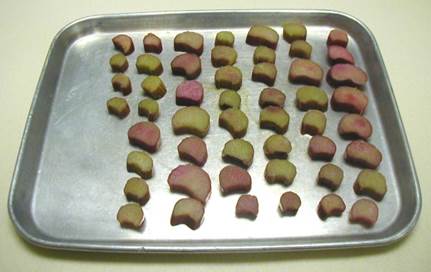
Pieces of Fruit on Tray for Freezing

–          Enzymes may still cause browning of fruits, so you may want to add ascorbic acid, citric acid, or lemon juice before freezing. Refer to http://nchfp.uga.edu/how/freeze.html for exact quantities.

–          You might also want to place the fruit pieces on cookie sheets or trays to freeze them individually before packing them for storage. This step makes it easier to separate them for use.

–          Store the pieces of fruit in a rigid container or plastic bag that holds one half-gallon or less so that all pieces freeze fast enough to produce a satisfactory quality. Choose containers that are moisture-vapor resistant, durable, leak-proof, easy to seal, and easy to mark. Label with the type of fruit and date for easy identification.

OLYMPUS DIGITAL CAMERAFrozen Fruits in Rigid Containers

Depending on where you live and from where you get your fruit, you might already be seeing strawberries fresh off the vine. Sooner or later you might also have fresh peaches, raspberries, blueberries, and/or blackberries. Whatever your local flavor, having some frozen fruits stored in the freezer will allow you to blend a fresh, cold smoothie whenever you like!

Ummm…what exactly is botulism? (Part III)

Botulism: Surprises

Before moving on to the brighter sides of home food preservation, a few more interesting and perhaps less known facts about botulism:

  • Home canned products may be the most well-known source of botulism, but in recent decades botulism has also been linked to unrefrigerated homemade salsa, baked potatoes in aluminum foil, garlic in oil, traditionally prepared salted/fermented fish, and honey (the primary cause of botulism in infants).
  • This might startle you, but we actually consume C. botulinum spores regularly and they generally do not harm adults. Adult human bodies prevent the growth of spores, such that no toxin can be produced.
  • However, spores have been found to germinate, colonize and produce deadly poison in the intestinal tracts of infants. Therefore, USDA recommends that honey is not given to children under 1 year of age and that fruits and vegetables be washed very well before fed to infants.
  • Clostridium botulinum toxin is among the most toxic substances known.
  • Cases of botulism have been reported in which people showed symptoms only 4 hours after ingestion. The longest time reported between ingestion and illness is 8 days.

Information in the entry comes from the USDA factsheet Clostridium botulinum and So Easy to Preserve.

Umm…what exactly is botulism? (Part II)

Botulism: Prevention

After reading last week’s entry you know where botulism comes from and the effects it has on people. But perhaps even more importantly, are you confident that you know how to prevent it?

There are essentially two ways to prevent botulism: 1) thermal destruction (heating) of spores and 2) inhibiting spores from germinating into toxin-producing vegetative cells.

Even in favorable conditions, C. botulinum vegetative cells and toxin should be destroyed when held at the temperature of boiling water (212°F at sea level) for a relatively short period of time. There are some other inactivation heat processes available for different types of food, also.  However, C. botulinum spores are much more heat resistant and need temperatures much higher than boiling to be killed in  reasonable times.  For home canning, we use temperatures of 240°F or above. It is very important to note that, unlike most bacteria, C. botulinum and other spores are NOT destroyed by normal cooking or boiling procedures. The spores require higher temperatures (240°F or above) that properly operated pressure canners create.

dial=gauge pressure canner

To prevent botulism, use approved processing methods and times as recommended by USDA. Carefully follow recommendations for pressure canning low acid foods. If you are still concerned if you did everything right, you can boil home-canned products in a saucepan on the stove for ten minutes before serving (add one minute more for each 1,000 of elevation).

Also remember that C. botulinum spores cannot germinate and then produce the toxin in pH levels of 4.6 or below. Acid foods and properly acidified food products have pH levels equal to or less than 4.6, so the toxin formation is prevented. Examples of acidified foods include pickles to which vinegar is added and salsa to which lemon juice is added.

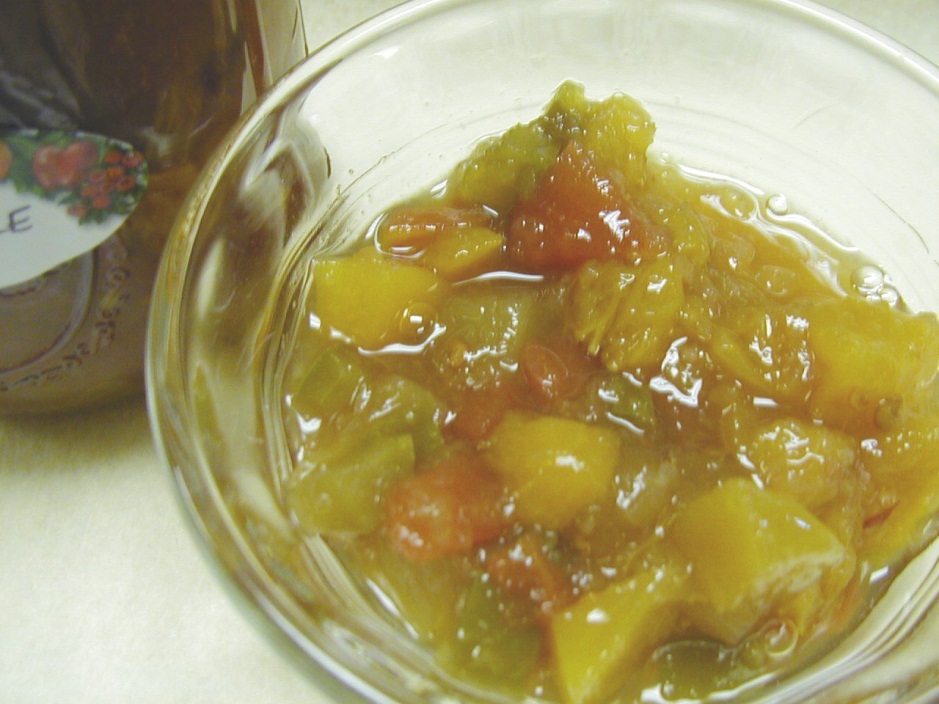
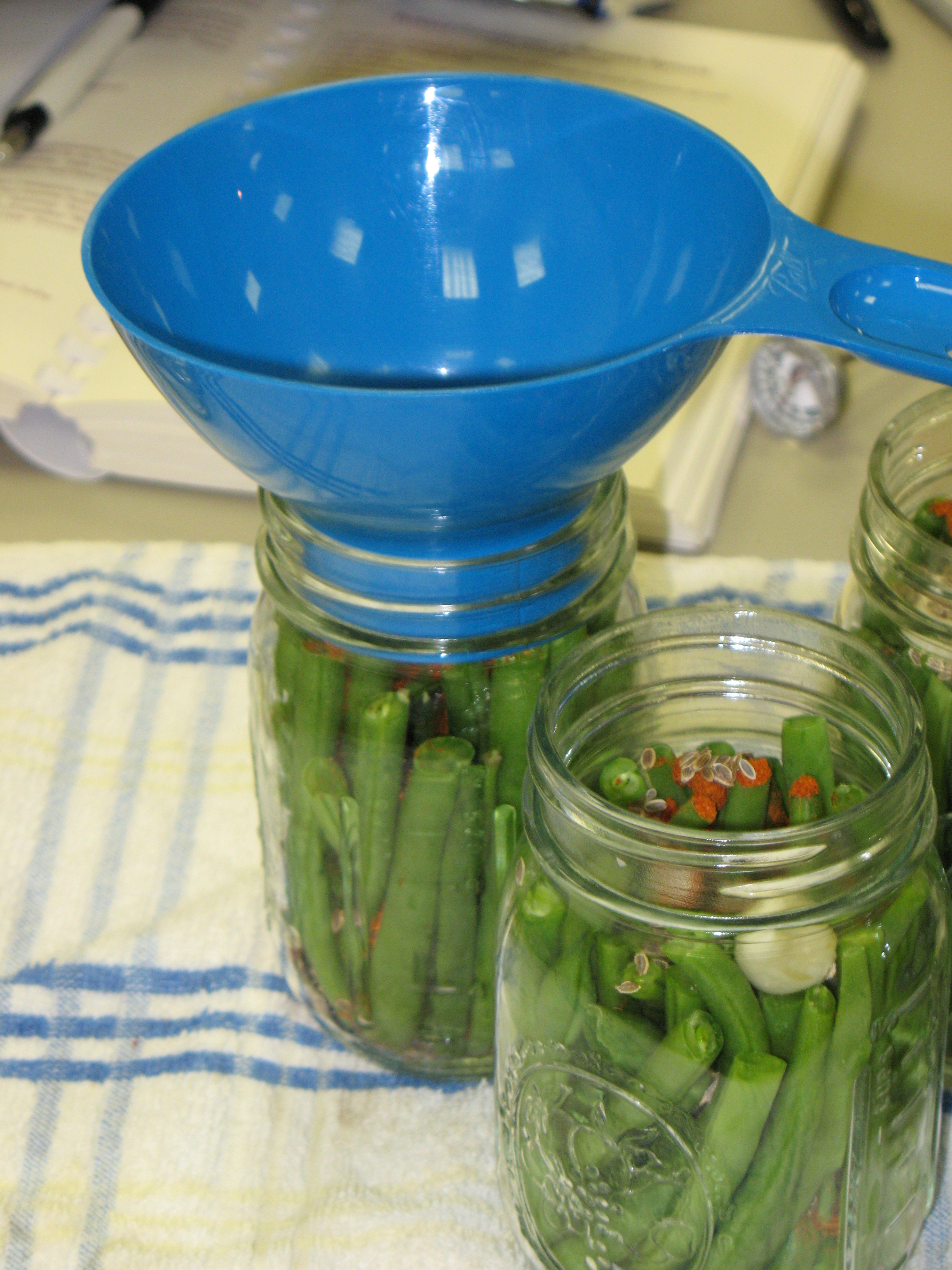
pickled green beanspeach apple salsa

You can further help prevent botulism and other foodborne illness by practicing general food safety; refrigerate all leftovers within 2 hours after cooking, and after just one hour if temperature is above 90°F. Discard, without tasting, any containers of food that are swollen, bulging, leaking, or cracked. Also immediately discard any product that spurts liquid or foam from a container once opened (unless it’s carbonated and shaken, of course).

Information in the entry comes from the USDA factsheet Clostridium botulinum and So Easy to Preserve.

Umm…what exactly is botulism? (Part I)

Glad you asked. This question is going to be answered in three parts, because it’s rather hefty, but very important to home food preservers, especially people who like to make canned products. The next three entries will cover the topics of Botulism: Sources (what it is and what it does), Botulism: Solutions (how you can prevent it), and Botulism: Surprises (did you know…).

Botulism: Sources

You’ve probably heard of botulism, and you likely know it’s a deadly foodborne disease. But do you know what causes botulism and how it works?

Let’s start by examining the source of botulism: rod-shaped bacteria called Clostridium botulinum. This microorganism is commonly found in soil and in marine sediment. It exists in two forms: as protected structures called spores, and as vegetative cells. To picture these forms, you could imagine spores like seeds and vegetative cells like sprouting plants.

C. botulinum spores are extremely common in soil and marine sediment, and therefore are also commonly found on the surfaces of fruits, vegetables, and seafood. Spores are generally harmless to adults (but can be harmful to infants; more about that later). The spore stage is formed when the bacteria are in an environment they find unfavorable; it is a protective stage that keeps the cell dormant or inactive but allows it to survive. When conditions are favorable, spores germinate into vegetative cells. Active vegetative cells are able to colonize and produce deadly botulinum toxin.

So what are those favorable conditions that allow the growth of C. botulinum?  Very low oxygen (such as in a sealed canning jar) and low acidity, meaning a pH value of 4.6 or above (such as in meats, vegetables, and some tomatoes, figs, and Asian pears).  That is why home food preservers need to be informed about Clostridium botulinum— you are not only dealing with the bacteria, but also the conditions ripe for them to grow out and produce toxin.

jars of veggies

What are the signs and symptoms of botulism? When consumed by humans, the neurotoxin produced by vegetative cells binds to nerve endings that join muscles, preventing muscles from contracting. Symptoms begin with nausea, vomiting, weakness, and dizziness which usually appear 12-36 hours after consuming the toxic food. Next are neurological symptoms such as blurry vision, difficulty speaking and swallowing, and lack of muscle coordination. Eventually the diaphragm and chest muscles become affected, which prevents breathing and results in death from asphyxia.

Can you do anything to stop botulism once the illness begins to affect the human body? Quick medical attention and injection of antitoxin can stop, but rarely reverse, nerve damage. Also, the antitoxin cannot always be used due to serious side effects.

Information in the entry comes from the USDA Factsheet Clostridium botulinum and So Easy to Preserve.