Prepare for Power Outages

Along with May flowers, spring (and summer) may bring storms strong enough to knock out your electricity. Mechanical failures and human error could cause a loss of power any time of year. However it happens, here are a few rules to follow so that you are prepared when the power goes out:

Rule #1: Have blankets available. If the power goes out, keep the freezer door closed. Wrap the freezer/refrigerator in blankets, making sure they do not touch the compressor. Food will typically stay frozen for about two days.

Rule #2: Know your equipment. Try to figure out what happened and restore power as soon as possible. This may mean replacing a fuse, securing a plug back into a working outlet…or finding out from your power company when to expect electricity to return.

Freezer

Rule #3: Know your neighbors. Try to locate a working freezer/refrigerated and move items there. Sometimes a friendly neighbor can offer the power you are missing.

Rule #4: Find out where you can purchase dry ice and/or bags of regular ice. If inclement weather such as severe thunderstorms, hurricanes, or tornados are predicted to head your way but you still have enough time to safely get to out of the house, then go out and bring back dry ice or extra bags of regular ice cubes.  If you expect the power to be out for more than 2 to 4 hours, then re-pack refrigerated items into coolers with ice or dry ice. To help you estimate how much dry ice is needed, consider that a 50-pound block is enough for a full twenty cubic foot freezer for 2 to 3 days. Take caution with dry ice; handle with gloves and do not attempt to break it into smaller pieces yourself.  Do not inhale the fumes (gas) given off.

Rule #5: Put an appliance thermometer in your refrigerator and one in your freezer now.
They cost less than $5 each at most stores.  The recommended storage temperature for perishable fresh foods (nonfrozen) is 40 degrees F. If the refrigerator or freezer temperature is above 40 degrees F, and it could have been for more than 2 hours, play it safe and do not eat perishable or completely thawed foods. Many frozen foods can be saved if they still have ice crystals in them.  See What to Do if the Freezer Stops for more details.

Rule #6: Get a food thermometer and keep it calibrated. Once power is back, check the internal temperature of your perishable foods before eating. If food has been 40 degrees F or higher for more than 2 hours, then discard it.

Kitchen thermometer

More information about how to calibrate your thermometer is available from the USDA Food Safety and Inspection Service. More information about storing food and water for emergency preparedness is available from the University of Georgia.

Information in this entry comes from What to do if the Freezer Stops and Preparing for Power Outages.

Strawberry-Kiwi Jam Recipe

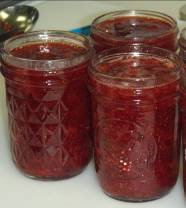
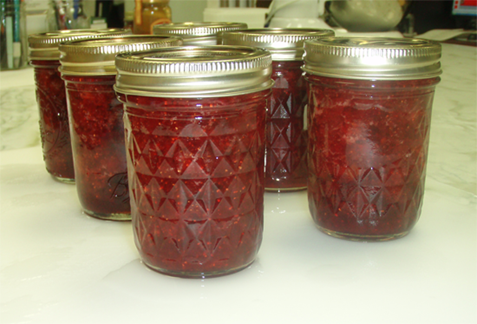
Strawberry Kiwi JamStrawberry-Kiwi Jam jars

Blending the local with the exotic, Strawberry-Kiwi jam is a flavorful extension of a classic strawberry jam. Strawberries are plumping up on farms in the southern states. If you’re farther north, then you might want to save this recipe for June or July when you’ll have fresh berries of your own. Or, you can pluck some strawberries off a shelf at the grocery store while you are purchasing the more exotic ingredients that most likely don’t grow close to home: kiwis and (crystallized) ginger.

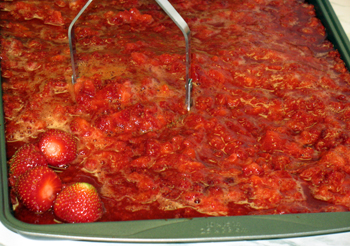
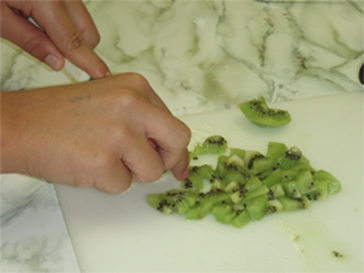
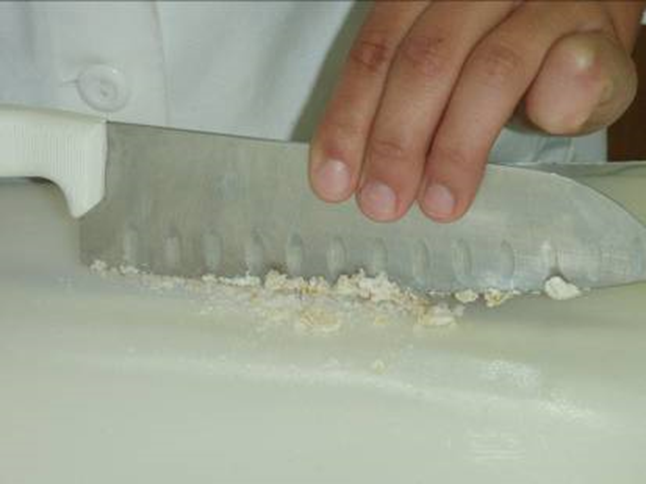
Crushing StrawberriesChopping KiwiMincing Crystallized Ginger

Strawberry-Kiwi jam is a slightly tangy, subtly spicy, but mostly sweet jam. It goes great on toast, and if you like to bake then try it in thumbprint cookies or with cake. Home canning beginners may want to follow the illustrated instruction guide available here: Step-By-Step Preserving Strawberry-Kiwi Jam. Please also read Using Boiling Water Canners and Principles of Home Canning before beginning. For those of you already comfortable with the basics, here’s the recipe from the University of Georgia publication So Easy to Preserve:

Strawberry-Kiwi Jam with powdered pectin

Makes about 6 half-pint jars

–          3 cups crushed strawberries

–          3 kiwi, peeled and diced

–          1 tablespoon lemon juice

–          1 tablespoon minced crystallized ginger

–          1 package powdered pectin

–          5 cups sugar

Procedure:

  1. Wash canning jars and keep warm.
  2. Prepare two-piece canning lids according to manufacturer’s directions.
  3. Combine strawberries, kiwi, lemon juice, ginger and pectin in a large saucepot. Bring quickly to a boil, stirring frequently.
  4. Add sugar, stirring until dissolved.
  5. Return to a rolling boil. Boil hard 1 minute, stirring constantly.
  6. Remove from heat. Skim foam if necessary.
  7. Ladle hot jam into hot jars, leaving ¼ inch headspace.
  8. Wipe jar rims and adjust lids.
  9. Process in a Boiling Water Canner using recommended process times in the table below.
Table 1.   Recommended process time for Strawberry-Kiwi Jam in a boiling water canner

Process   Time at Altitudes of

Style   of Pack

Jar   Size

0   – 1,000 ft

1,001   – 6,000 ft

Above   6,000 ft

Hot

Half-pints
or Pints

10   min

15 min

20 min

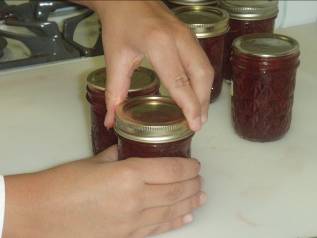
Open jars of jam Turning Until Fingertip Tight

If you’re not able to access the Step-By-Step instructions, then go to http://nchfp.uga.edu/how/can7_jam_jelly.html and click on “Step-By-Step Preserving Strawberry-Kiwi Jam”.

Plan to can so your summer won’t be a bummer

1,2,3 calendar

Whether you’ve been canning for decades or are just learning how to can for the first time, proper equipment in good condition is required to make safe, high quality canned foods at home. To save money, time, and frustration once the harvest is ready, plan ahead now for successful home canning all summer long.

If you’ve not yet purchased your needed equipment, there are two types of canners to consider: boiling water canners and pressure canners. A boiling water canner is used for canning acid or acidified foods like fruits, pickles, jams and jellies. Boiling water canners cost $15-$35, or can be assembled with a large stock pot, secure lid, and rack to keep jars off the bottom of the pot.

A pressure canner is what you’ll need for canning low acid foods such as vegetables, meats, fish, and poultry. Pressure canners are essential for safe canning of low acid foods. Temperatures inside pressure canners reach higher than in boiling water canners (240°F and above as compared to about 212°F). These high temperatures are necessary to kill the toxin–producing spores of the bacteria Clostridium botulinum.

You get to choose between two types of pressure canners: a dial gauge canner or a weighted gauge canner. The canners work the same way, but have different types of gauges to indicate the pressure inside the canner. Expect to spend $100-$150 or more on a pressure canner.

dial=gauge pressure canner Presto Pressure Canner

If you use a dial gauge canner, then it’s important to have it tested for accuracy before each canner season. Local hardware stores and your local Extension agent may be able to help you with this task. For either type of canner, check that the rubber gasket is flexible and soft, and if it is brittle, sticky, or cracked then replace it with a new gasket. Also check that any openings, like vent ports, are completely clean and open.

You’ll also need jars, lids, and ring bands. When getting started, new jars are a worthwhile investment (versus purchasing used jars from a yard sale or flea market) because very old jars may break under pressure and heat. Mason-type jars with two-piece self-sealing lids are recommended in USDA guidelines. Jars, with lids and ring bands, cost between $5-$17 per dozen depending on the brand and size. Look for manufacturer’s coupons, store specials and online discounts.

Once you have jars you’ll want to check them carefully before each use for cracks or chips, especially near the top sealing edge. Similarly, check ring bands for dents, bends and rust. Both jars and ring bands are reusable until they show these aforementioned signs of wear. Standard metal flat lids are designed for one use only, so discard any used lids and buy new flat lids.

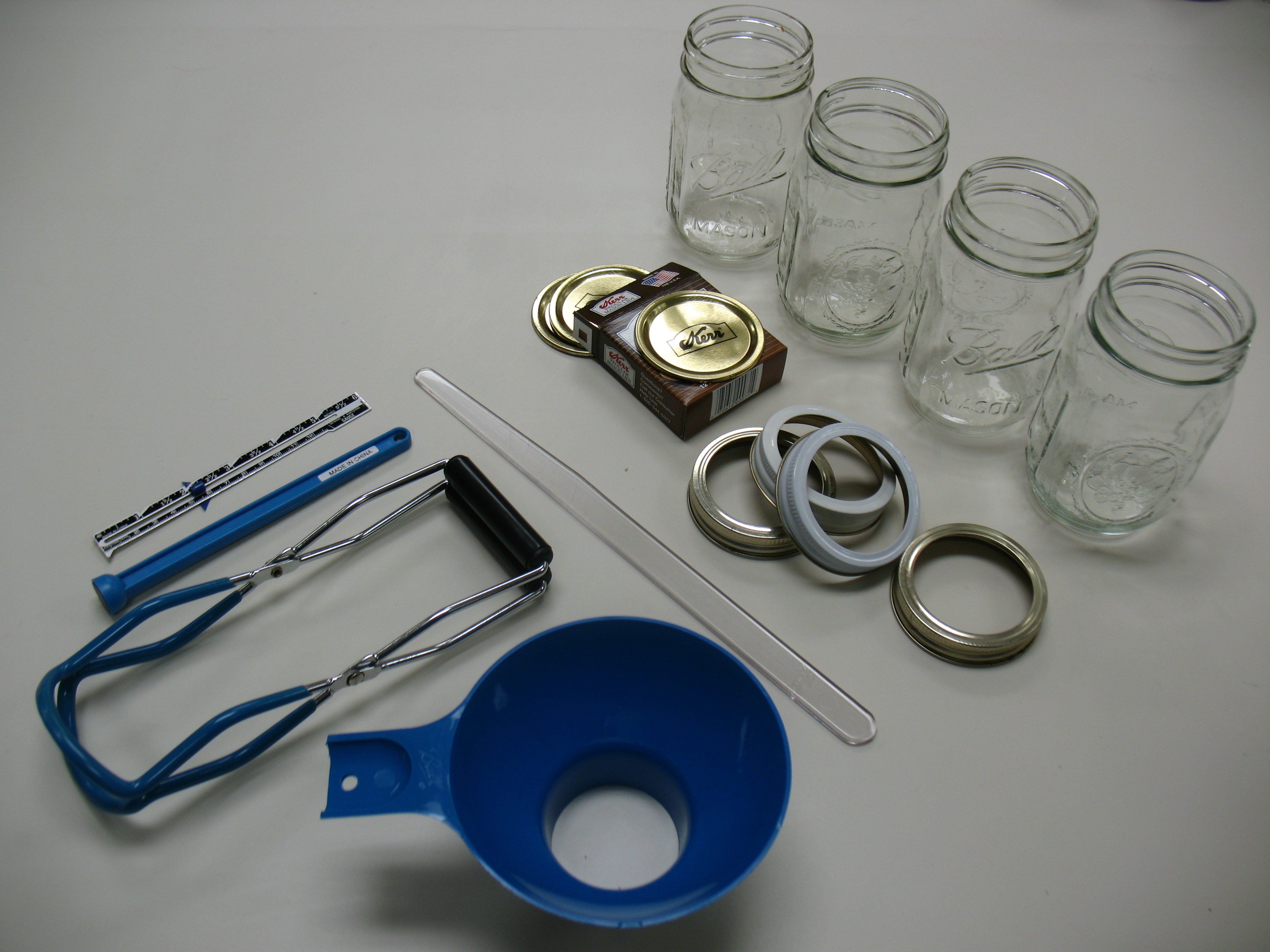
 Jars, bands, and more

In addition to standard cooking utensils like cutting boards and bowls, a jar funnel, jar lifter, lid wand, headspace tool, and bubble-freer are items that you will want to have handy for canning.

Lastly, find recipes and instructions for what you want to can. Specific kitchen equipment or ingredients could be needed to follow directions for food preparation. Reliable, up-to-date canning instructions are available at the NCHFP website, the USDA Complete Guide to Home Canning, So Easy to Preserve, or your county Extension office.

This entry is a modification of ‘Plan Ahead for Home Canning this Summer’ by Dr. Elizabeth Andress and contains information from ‘Cost of Preserving and Storing Food’ by Colorado State University Extension.

Why can’t I can what companies can?

As a home canner looking for new recipes to try out, you might sometimes be inspired by commercial products found on grocery shelves. But even after scouring through all your recipe books, magazines, and online resources there are still some products for which you cannot find home canning recommendations. Why is this? What do these companies have that you don’t?

Well, in summary, companies have two things that home canning does not have: 1) special equipment and 2) lots of money for research.

Commercial facilities have industrial equipment that can reach higher temperatures more quickly than what can be achieved at home. With specialized equipment, they are also able to control the consistency and maturity of ingredients. This control reduces the variability of the canning process, which allows for more reliable research (and therefore more product development) than can be done for home-canning practices.

Companies pay to conduct expensive research in order to determine safe product formulas and processing methods for each and every product. Even if just one ingredient is added to an already approved product, that new recipe must be carefully tested before being manufactured for sale. Acidity levels, water activity, and heat penetration are all critical factors influencing processing times, and these factors vary greatly among different recipes.

Proper studies to establish processing times for both commercial and home-canned recipes are crucial to the safety of canned foods. Without proper processing times, there is significant risk of botulism resulting from under-processed canned foods, especially low acid foods. Experimentally determining safe processing times requires a lot of time and money, and there is no easy formula to take into account the way that each product heats in each canning situation. Commercial and home-canning processes are not interchangeable. That is why there are fewer recipes and processes for home canning than many people would like.

For more information about heat processing of home-canned foods, read this ‘Backgrounder’ by Elaine M. D’sa.