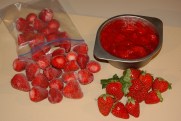
 Do you like berries in pies, on top of oatmeal, in baked goods, in smoothies, in sauces, or as a refreshing snack? By following proper preparation steps, you can freeze berries so that they maintain flavor, color, and nutrients for all of these uses and more. Remember the idea of “quality in, quality out” in selecting fully ripe, firm berries that are not too soft, under-ripe or damaged.
Depending on how you plan to use the berries, you might want to use any one of these packing methods:
A dry pack is simply placing clean berries in freezer containers, sealing the container, and freezing. Unless they are tray packed (see below), they most likely will clump together and be difficult to separate into individual berries. Note: Dry blueberries completely after rinsing, or else the moisture on the blueberry skin will cause tougher skins.
A tray pack works well to help maintain the shape of each individual berry and keeps them easy to  remove from the container and separate from each other. This method is called a tray pack because after rinsing and completely drying the berries, you spread them in a single layer on a shallow tray (like a cookie sheet), then carefully lift the tray into the freezer without causing berries to touch each other. As soon as they freeze, seal the berries in an airtight container and place them back into the freezer so they don’t get freezer burn.
Okay, we know not every source recommends washing blueberries before freezing them. It is your choice; we just like them to be as clean as possible and completely ready-to-eat when it’s time to take them out of the freezer. But, they do need to be completely dry before freezing for best quality.
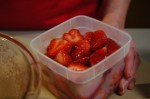
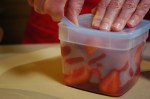
A sugar pack is like a dry pack but with one extra step – gently mix ¾ cup sugar per 1 quart (1⅓  pounds) clean berries. Let sit a short time until the juice is drawn out and the sugar dissolved before filling into freezer containers, sealing, and placing in the freezer. You can view step-by-step directions and photos for a sugar pack by selecting the PowerPoint presentation under “Strawberries” on the National Center’s ‘Freezing’ page.
A syrup pack surrounds the berries in a sweetened liquid, changing the sweetness and texture of the berries quite noticeably. Based on the natural sweetness of the berries and your own preference, you can decide the proportion of sugar to water from very light syrup (10% sugar) to very heavy syrup (50% sugar). More tart berries may produce the most desirable flavor from using a 40%-50% syrup. Exact proportions for the range of syrups are listed on this Syrups chart, along with directions to make the syrup and notes about replacing part of the sugar with corn syrup or honey.
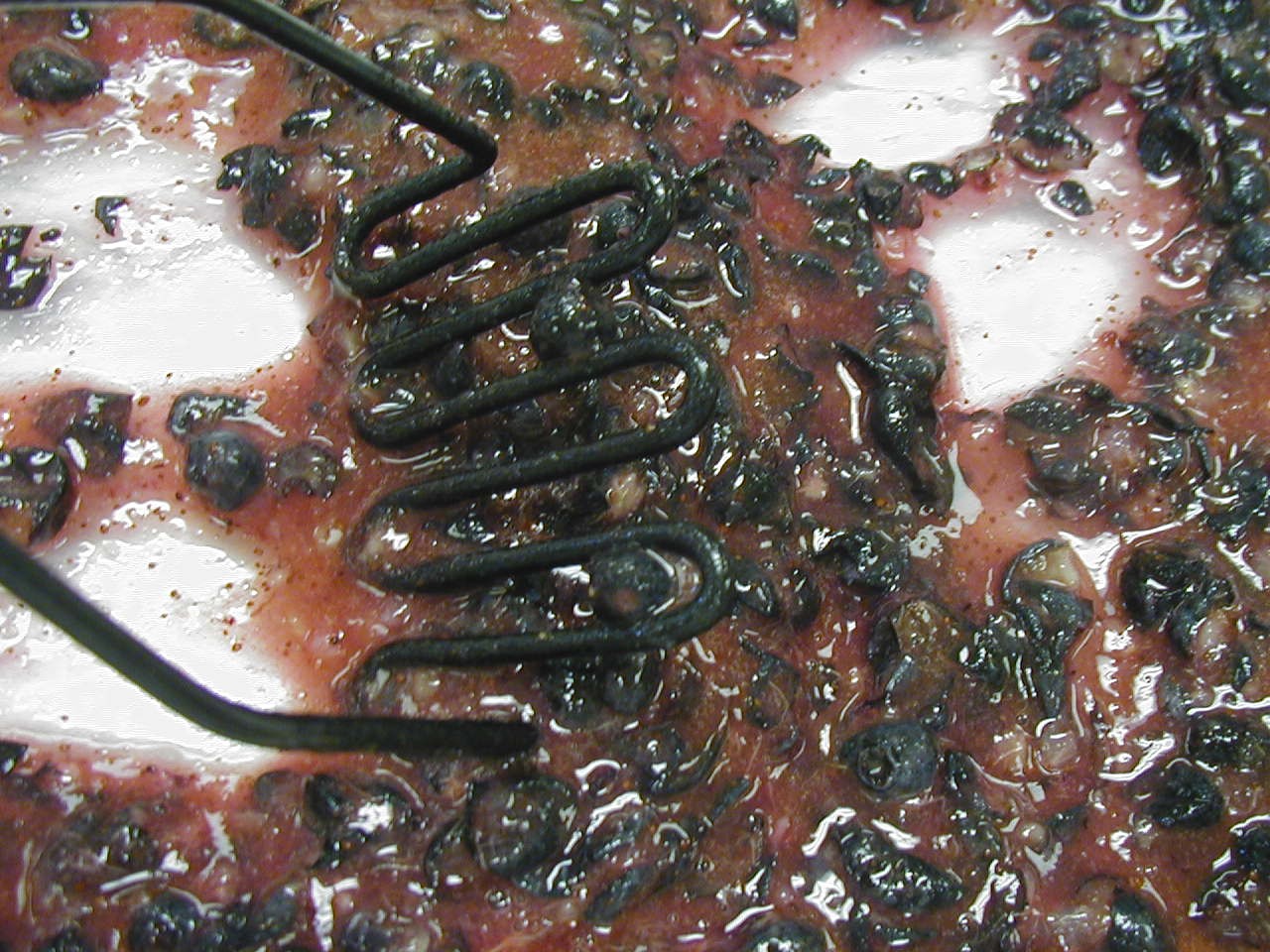
Crushed or puréed is an option for berries like blueberries and huckleberries that you might use an ingredient in other recipes. The berries can be crushed, pressed through a fine sieve or puréed in a blender or food processor. Mix 1 cup (or 1⅛ cups) sugar with each quart (2 pounds) of crushed or puréed berries.
If you add sugar to the berries before freezing (as in the sugar pack, syrup pack, or crushed/puréed), then label the container with exactly how much sugar you add, so that you can include that quantity as part of the amount of sugar called for on the ingredient list of your final product recipe. If you know you will use your berries for a jam or other recipe, you can mix just the right amount of fruit and sugar together before freezing.
For all types of pack, remember to leave at least ½-inch headspace (more for some styles of pack; see chart for exact measurements) between the berries and the lid of each container so that the containers don’t break open while expanding in the freezer. Also make sure the sealing surfaces of your lid and bottom are completely clean and dry, if you don’t use a plastic bag. Any trapped food, sugar or syrup can expand when frozen and separate the tight seal that should be in place.
 Husk tomatoes, also known as tomatillos, can be very productive plants, producing 64 to 200 fruits per plant in a season. Tomatillos don’t like freezing, so should be planted after any danger of last frost. Planted as such, they will flower mid-June and ripen mid-July.





 Preserving Food at Home
You must be logged in to post a comment.