Category Archives: Seasonal Food Tips

Prepare for Power Outages

Along with May flowers, spring (and summer) may bring storms strong enough to knock out your electricity. Mechanical failures and human error could cause a loss of power any time of year. However it happens, here are a few rules to follow so that you are prepared when the power goes out:

Rule #1: Have blankets available. If the power goes out, keep the freezer door closed. Wrap the freezer/refrigerator in blankets, making sure they do not touch the compressor. Food will typically stay frozen for about two days.

Rule #2: Know your equipment. Try to figure out what happened and restore power as soon as possible. This may mean replacing a fuse, securing a plug back into a working outlet…or finding out from your power company when to expect electricity to return.

Freezer

Rule #3: Know your neighbors. Try to locate a working freezer/refrigerated and move items there. Sometimes a friendly neighbor can offer the power you are missing.

Rule #4: Find out where you can purchase dry ice and/or bags of regular ice. If inclement weather such as severe thunderstorms, hurricanes, or tornados are predicted to head your way but you still have enough time to safely get to out of the house, then go out and bring back dry ice or extra bags of regular ice cubes.  If you expect the power to be out for more than 2 to 4 hours, then re-pack refrigerated items into coolers with ice or dry ice. To help you estimate how much dry ice is needed, consider that a 50-pound block is enough for a full twenty cubic foot freezer for 2 to 3 days. Take caution with dry ice; handle with gloves and do not attempt to break it into smaller pieces yourself.  Do not inhale the fumes (gas) given off.

Rule #5: Put an appliance thermometer in your refrigerator and one in your freezer now.
They cost less than $5 each at most stores.  The recommended storage temperature for perishable fresh foods (nonfrozen) is 40 degrees F. If the refrigerator or freezer temperature is above 40 degrees F, and it could have been for more than 2 hours, play it safe and do not eat perishable or completely thawed foods. Many frozen foods can be saved if they still have ice crystals in them.  See What to Do if the Freezer Stops for more details.

Rule #6: Get a food thermometer and keep it calibrated. Once power is back, check the internal temperature of your perishable foods before eating. If food has been 40 degrees F or higher for more than 2 hours, then discard it.

Kitchen thermometer

More information about how to calibrate your thermometer is available from the USDA Food Safety and Inspection Service. More information about storing food and water for emergency preparedness is available from the University of Georgia.

Information in this entry comes from What to do if the Freezer Stops and Preparing for Power Outages.

Plan to can so your summer won’t be a bummer

1,2,3 calendar

Whether you’ve been canning for decades or are just learning how to can for the first time, proper equipment in good condition is required to make safe, high quality canned foods at home. To save money, time, and frustration once the harvest is ready, plan ahead now for successful home canning all summer long.

If you’ve not yet purchased your needed equipment, there are two types of canners to consider: boiling water canners and pressure canners. A boiling water canner is used for canning acid or acidified foods like fruits, pickles, jams and jellies. Boiling water canners cost $15-$35, or can be assembled with a large stock pot, secure lid, and rack to keep jars off the bottom of the pot.

A pressure canner is what you’ll need for canning low acid foods such as vegetables, meats, fish, and poultry. Pressure canners are essential for safe canning of low acid foods. Temperatures inside pressure canners reach higher than in boiling water canners (240°F and above as compared to about 212°F). These high temperatures are necessary to kill the toxin–producing spores of the bacteria Clostridium botulinum.

You get to choose between two types of pressure canners: a dial gauge canner or a weighted gauge canner. The canners work the same way, but have different types of gauges to indicate the pressure inside the canner. Expect to spend $100-$150 or more on a pressure canner.

dial=gauge pressure canner Presto Pressure Canner

If you use a dial gauge canner, then it’s important to have it tested for accuracy before each canner season. Local hardware stores and your local Extension agent may be able to help you with this task. For either type of canner, check that the rubber gasket is flexible and soft, and if it is brittle, sticky, or cracked then replace it with a new gasket. Also check that any openings, like vent ports, are completely clean and open.

You’ll also need jars, lids, and ring bands. When getting started, new jars are a worthwhile investment (versus purchasing used jars from a yard sale or flea market) because very old jars may break under pressure and heat. Mason-type jars with two-piece self-sealing lids are recommended in USDA guidelines. Jars, with lids and ring bands, cost between $5-$17 per dozen depending on the brand and size. Look for manufacturer’s coupons, store specials and online discounts.

Once you have jars you’ll want to check them carefully before each use for cracks or chips, especially near the top sealing edge. Similarly, check ring bands for dents, bends and rust. Both jars and ring bands are reusable until they show these aforementioned signs of wear. Standard metal flat lids are designed for one use only, so discard any used lids and buy new flat lids.

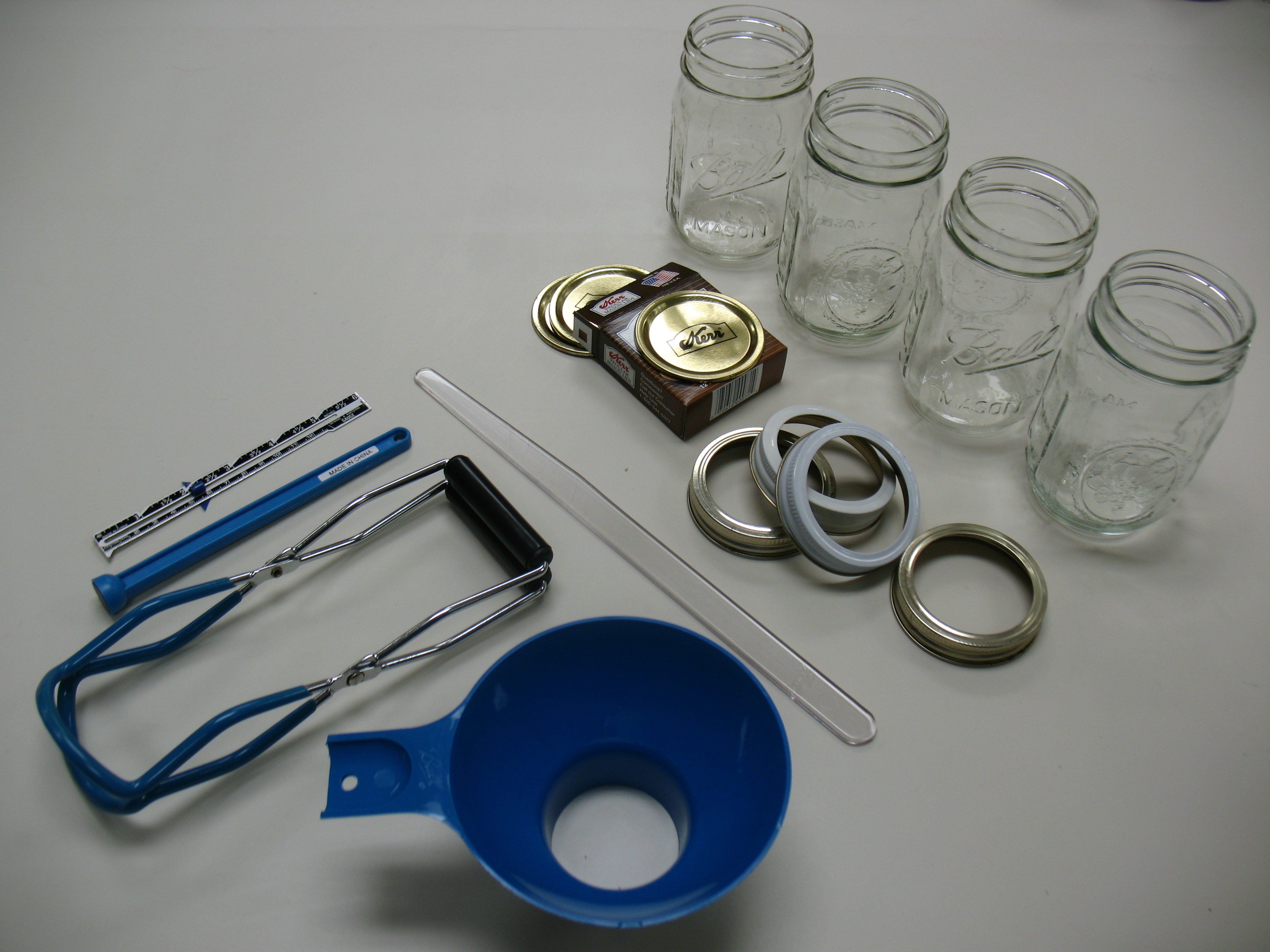
 Jars, bands, and more

In addition to standard cooking utensils like cutting boards and bowls, a jar funnel, jar lifter, lid wand, headspace tool, and bubble-freer are items that you will want to have handy for canning.

Lastly, find recipes and instructions for what you want to can. Specific kitchen equipment or ingredients could be needed to follow directions for food preparation. Reliable, up-to-date canning instructions are available at the NCHFP website, the USDA Complete Guide to Home Canning, So Easy to Preserve, or your county Extension office.

This entry is a modification of ‘Plan Ahead for Home Canning this Summer’ by Dr. Elizabeth Andress and contains information from ‘Cost of Preserving and Storing Food’ by Colorado State University Extension.

Freezing Fruits for Summer Smoothies

Springtime often brings warm sunshine, cool breezes, fresh fruits…and the opportunity to plan refreshing treats for the hot summertime ahead. Fruit smoothies in the summer are not only a welcomed way to cool down but are also nutritious, delicious, and easy to prepare. Due to the popularity of smoothies, recipes are easy to find; look online, on product packaging, and in books and magazines. Once you get the hang of it you’ll be making recipes of your own.

A medley of frozen fruits from our global food suppliers helps you mix-and-match a variety of flavors with fresh fruits and berries that will be ready for harvest later in the season. Fruits like bananas, pineapple, and mango are not typically grown in the United States, but are available year-round at grocery stores. These three fruits in particular add consistently tasty flavor and texture to smoothies. Keeping them frozen allows you to use them in smoothies as you would otherwise use ice cubes- but fruit “ice cubes” pack a lot more flavor than regular ice cubes!

Freezing these fruits for smoothies is simple:

–          Make sure your freezer is set to 0°F or below.

–          Select fruits that are mature, ripe, and at their peak of freshness.

–          Work under sanitary conditions; freezing does not destroy enzymes or kill microorganisms, it just slows their effects.

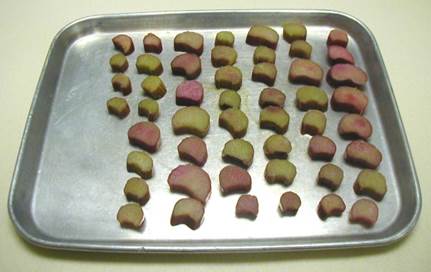
–          Peel fruits, remove cores or seeds as needed, then slice into chunks about the size of regular ice cubes.

Pieces of Fruit on Tray for Freezing

–          Enzymes may still cause browning of fruits, so you may want to add ascorbic acid, citric acid, or lemon juice before freezing. Refer to http://nchfp.uga.edu/how/freeze.html for exact quantities.

–          You might also want to place the fruit pieces on cookie sheets or trays to freeze them individually before packing them for storage. This step makes it easier to separate them for use.

–          Store the pieces of fruit in a rigid container or plastic bag that holds one half-gallon or less so that all pieces freeze fast enough to produce a satisfactory quality. Choose containers that are moisture-vapor resistant, durable, leak-proof, easy to seal, and easy to mark. Label with the type of fruit and date for easy identification.

OLYMPUS DIGITAL CAMERAFrozen Fruits in Rigid Containers

Depending on where you live and from where you get your fruit, you might already be seeing strawberries fresh off the vine. Sooner or later you might also have fresh peaches, raspberries, blueberries, and/or blackberries. Whatever your local flavor, having some frozen fruits stored in the freezer will allow you to blend a fresh, cold smoothie whenever you like!

Cranberry Conserve

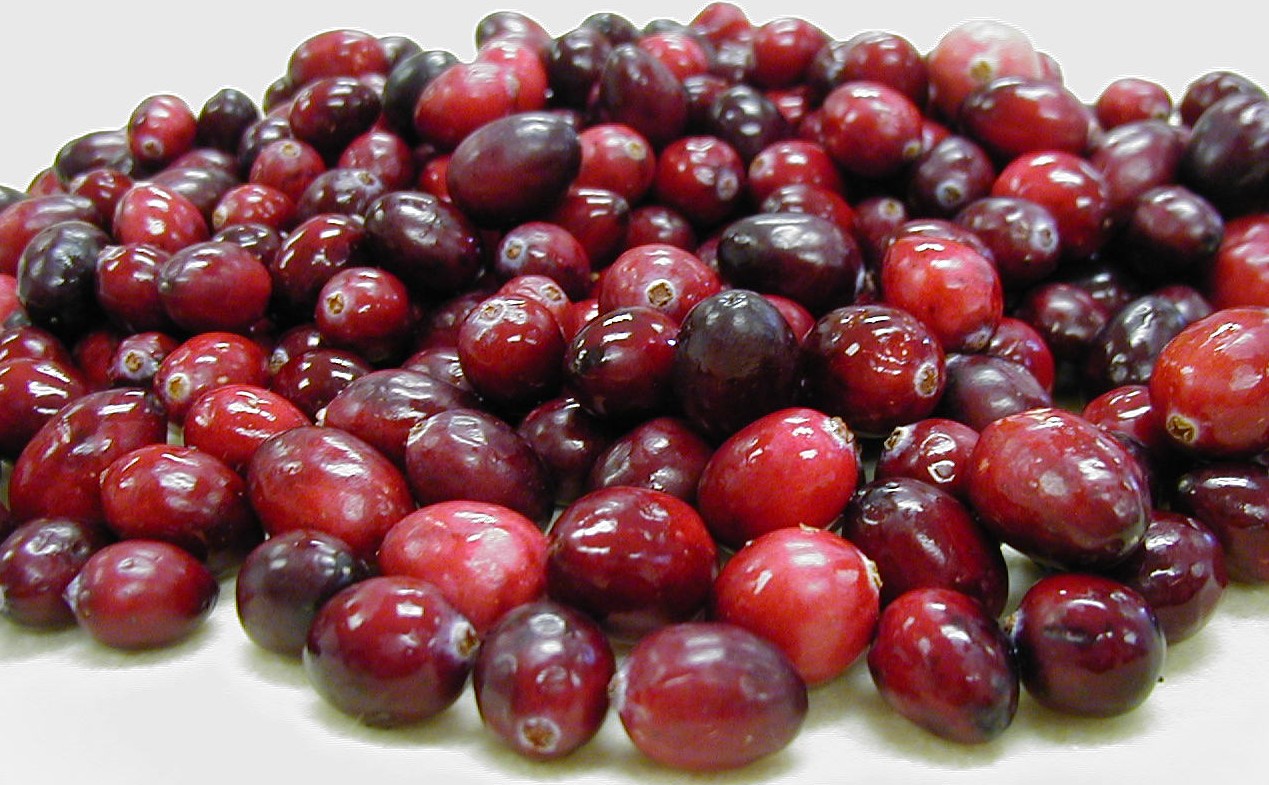
cranberries in (and out of) bowl

Since you can still find fresh cranberries at some stores, here’s a Cranberry Conserve recipe from So Easy to Preserve that makes a more hearty treat out of a classic wintertime favorite. Make and enjoy- before it’s too late!

Cranberry Conserve

  • 1 unpeeled, finely chopped orange
  • 1 cup water
  • 3 cups sugar
  • 1 quart cranberries, washed
  • ½ cup seedless raisins
  • ½ cup chopped nuts (walnuts or pecans make a tasty choice)

Yield: About 4 half-pint jars

Please read Using Boiling Water Canners before beginning. If this is your first time canning, it is recommended that you read Principles of Home Canning.

Procedure: Combine orange and water; cook rapidly until peel is tender (about 20 minutes). Add cranberries, sugar and raisins. Bring slowly to boiling, stirring occasionally until sugar dissolves. Cook rapidly, almost to the jellying point of 220°F (about 8 minutes). As mixture thickens, stir frequently to prevent sticking. Add nuts during the last 5 minutes of cooking. Pour hot conserve into hot jars, leaving ¼-inch headspace. Wipe rims of jars with a dampened clean paper towel; apply two-piece metal canning lids. Process in a Boiling Water Canner.

Table 1. Recommended process time for Cranberry Conserve in a boiling water canner.
Process Time at Altitudes of
Style of Pack Jar Size 0 – 1,000 ft 1,001 – 6,000 ft Above 6,000 ft
Hot Half-pints 10 min 15 20

more cranberries