Category Archives: Recipes

Be Merry with Cranberries

Cranberries

Use fresh cranberries in these innovative recipes from the National Center for Home Food Preservation (NCHFP) to spice up your holiday meals. The yields will provide you with some for now, some for later, and some to give away! Elizabeth Andress, Director of the NCHFP, had this to say about these exciting recipes, “Both of these can be made during cranberry season and used as delightful homemade gifts.”

Cranberry Orange Chutney stands on its own as a side dish, or can be spooned over or basted into ham, turkey, chicken, or pork. Cranberries have so much natural pectin that the final product is almost jellied.  Raisins add texture to tang from orange juice and zest, while the warm spice of ginger and cinnamon round out the overall flavor. You could add small amounts of other dried spices if you like, such as cloves, dry mustard, or cayenne pepper. After it’s made, chutney will continue to set over the next 24 hours, but you can eat it once it cools down. Store un-canned chutney in clean storage containers and refrigerate. Remember to also refrigerate opened jars if you don’t finish it all at once.

Spicy Cranberry Salsa brings something new to the table by essentially switching out tomatoes for cranberries. The flavor is highlighted by Serrano peppers and honey. Use this salsa as a dip for chips, as a side with meat, or as a spread stirred into cream cheese. This recipe, procedure, and process time are also available in Spanish.

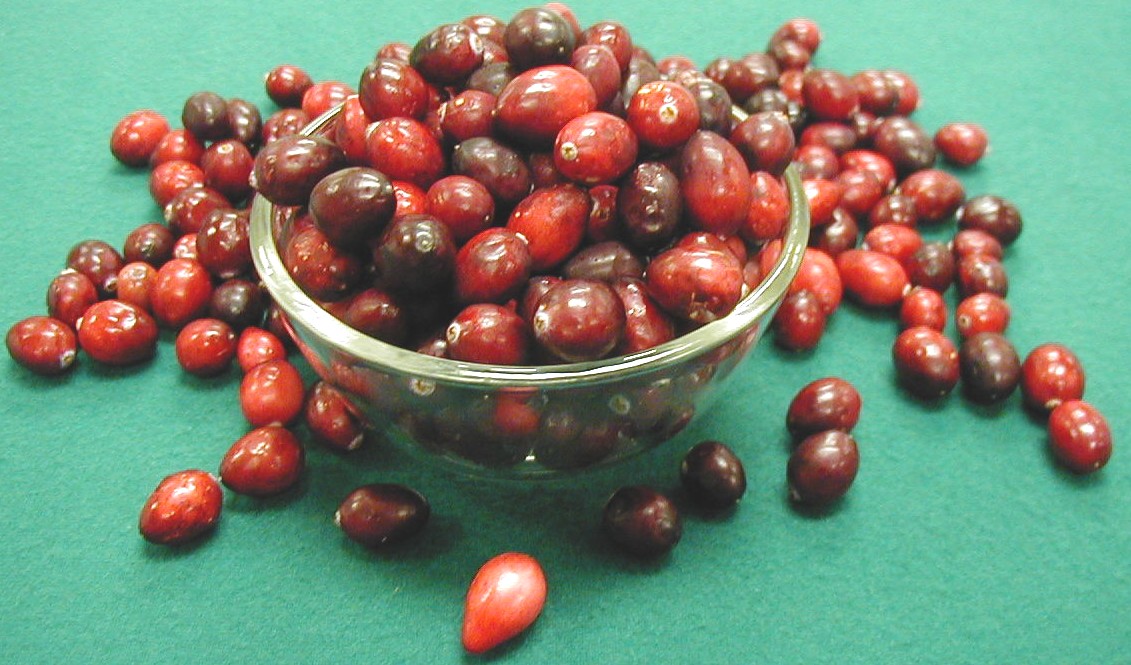
Loose cranberries

This entry was inspired by an article written by April Reese Sorrow and Elizabeth L. Andress for the National Center for Home Food Preservation.

Apple Abundance

Apple jelly jarsIf your apple season is winding down with A LOT of apples, or if you stumble into a great sale at the grocery store, then you likely have enough apples to make apple juice and/or jelly!

First, prepare apples for extracting their juice. If you plan to make jelly and use purchased pectin, then you can use all ripe apples. If you are going to make jelly and rely on only the natural pectin in apples, then use ¼ slightly under-ripe apples and ¾ just ripe apples. Make juice in small batches – about 3 pounds of apples with 3 cups water will produce 4 cups apple juice. Sort the apples, discarding damaged portions. Wash the apples and cut them into pieces, but DO NOT remove skins or cores – the pectin is most concentrated in the skins and cores.

Now you’re ready to extract the juice. Place fruit into a flat-bottomed saucepan and add one cup water per pound of apples. Bring to a boil on high heat and stir to prevent scorching. Reduce heat and cook until soft, about 20 to 25 minutes. Be careful not to overcook; too much boiling will destroy the pectin, flavor, and color.

To clarify the juice, pour the entire contents of the saucepan into a damp jelly bag and suspend the bag so that the juice drains into a large bowl. For the clearest juice (and therefore the clearest jelly), do not press or squeeze the jelly bag.

using-a-jelly-bag

Once the juice is clarified, you may freeze it. Be sure to leave 1½-inch headspace and use a moisture-proof, durable freezer container. If you think you might use the juice for jelly, then do not presweeten it before freezing.

If you want to can the juice as is, follow these directions for canning Apple Juice in a boiling water canner. (Note: you could also can local cider from a cider maker; try to can it within 24 hours after being pressed.)

Follow these directions if you want to use the juice in Apple Jelly without added pectin.

Refer to pectin product packaging and follow those directions if you prefer to make jelly with added pectin.

© Andress, E.L., Harrison, J.A., eds. (2006). So Easy to Preserve, 5th ed. Athens, GA: University of Georgia Cooperative Extension.

Fall into the Season with Home-Canned Applesauce

Applesauce is a sweet treat for little kids and big kids (also known as adults) alike.  In addition to tasting delicious, one cup of applesauce provides 12% Daily Value (DV) of fiber and contains 3% DV or more of Vitamin C, Vitamin B-6, Thiamin, Riboflavin, Potassium, Copper, and Manganese.

This recipe for Applesauce from the USDA Complete Guide to Home Canning may be canned in a boiling water canner or a pressure canner. You can also tailor the recipe slightly, deciding how sweet or tart you prefer your final product and also if you’d like its texture to be smooth or chunky.

An average of 21 pounds of apples is needed for a canner load of 7 quarts. If you are using pint jars, then about 13½ pounds are needed for a canner load of 9 pints. Select apples that are juicy and crispy. For a sweeter sauce, select apples that are sweet. For more tartness, combine 1 to 2 pounds of tart apples to each 3 pounds of sweeter fruit.

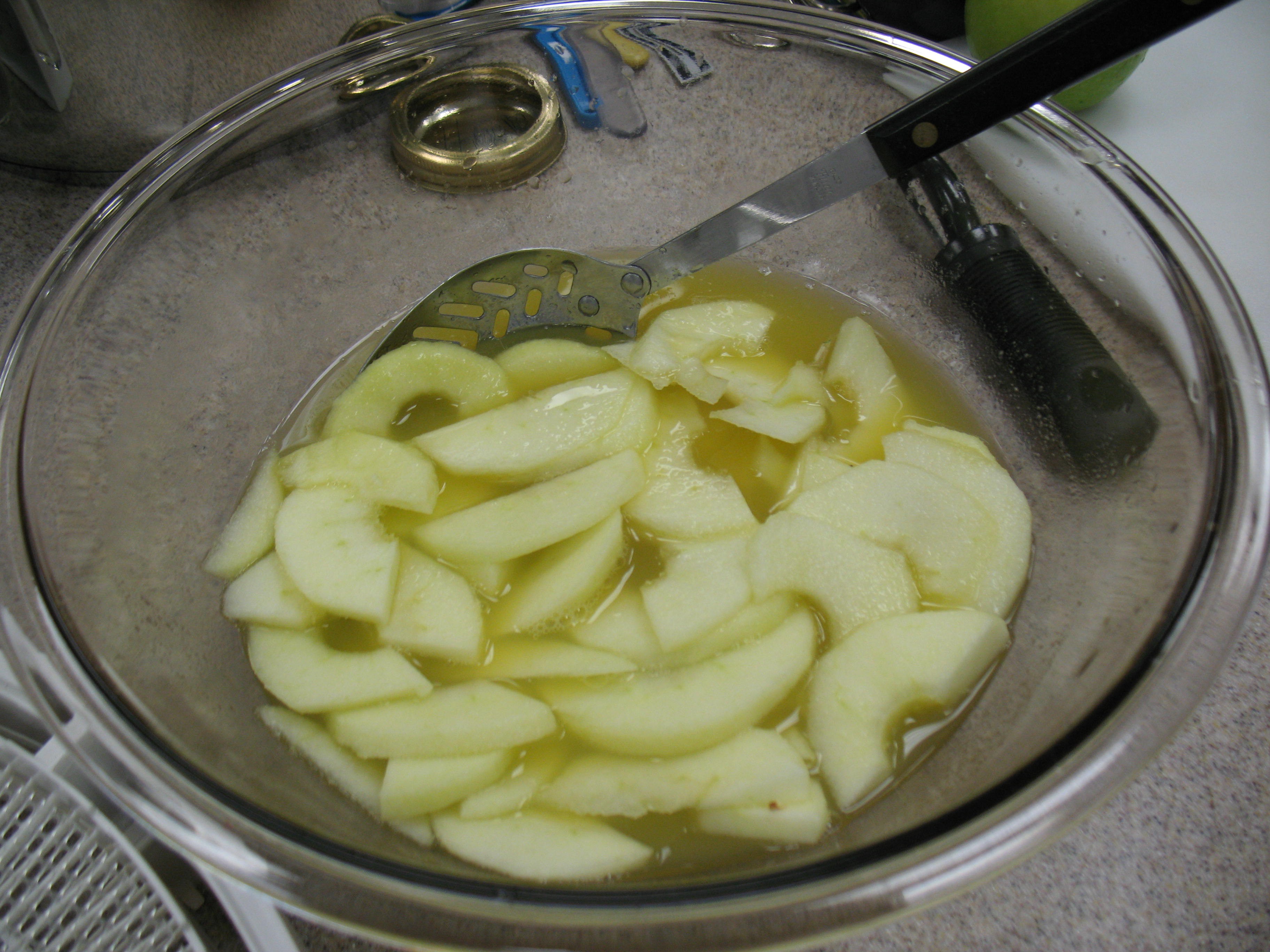
Apple slices in ascorbic acidWash, peel, and core apples. To prevent browning, you have the option to slice apples into water containing ascorbic acid. Use these guidelines for retaining optimum color and flavor to ensure that you use the proper proportion of ascorbic acid. After slicing, place apples slices into an 8- to 10- quart pot, draining the slices first if you used an ascorbic acid solution. Add ½ cup water. Heat quickly, stirring occasionally to prevent scorching, and cook until tender (5 to 20 minutes, depending on maturity and variety).

For a smoother texture, press through a sieve or food mill. For a chunk-style sauce, skip this step.

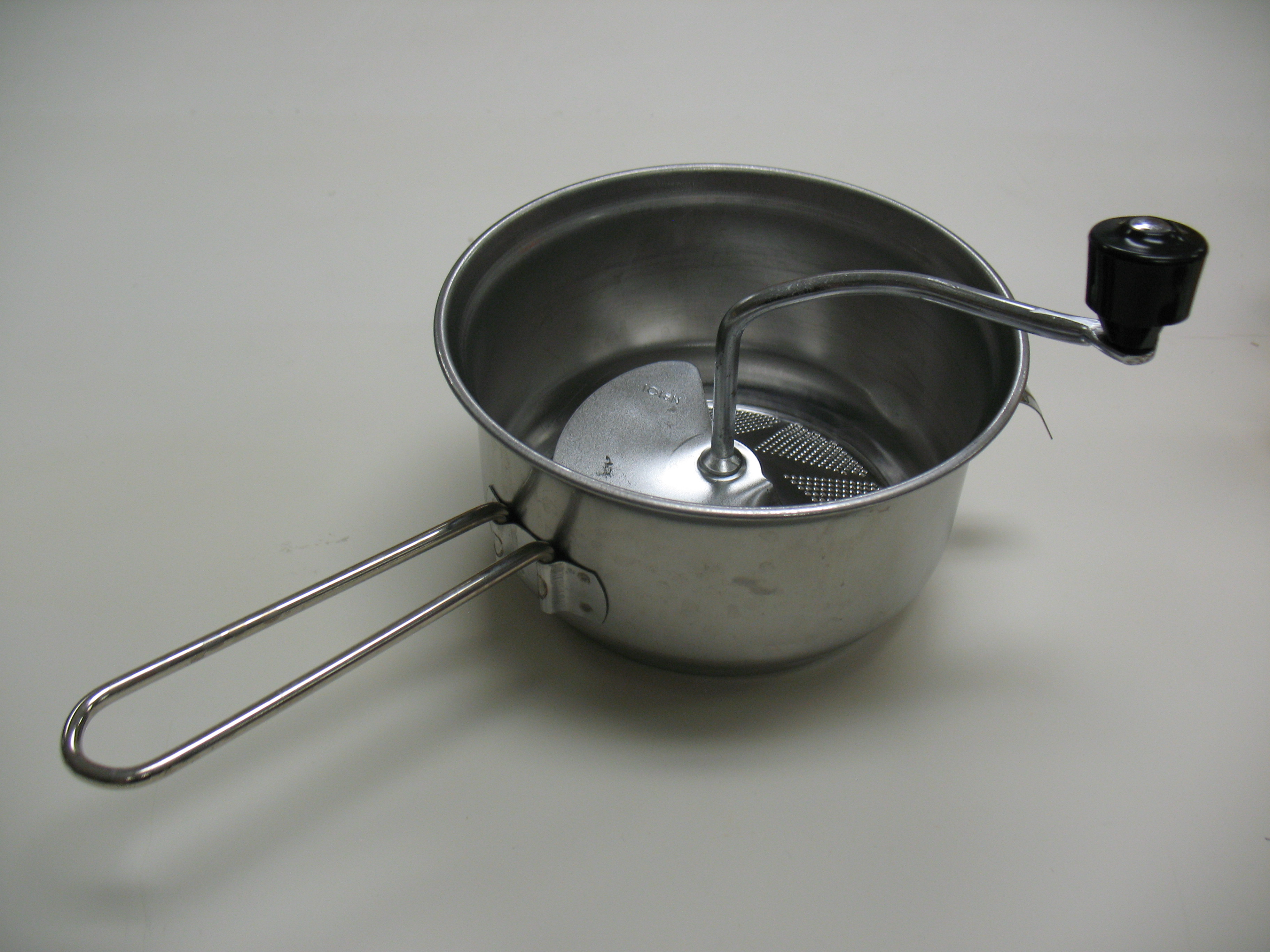
food millYour sauce may now be packed. If you’d rather sweeten it, then add 1/8 cup sugar per quart of sauce. Taste and add more, as you please. If sugar is added, reheat sauce to boiling then pack into jars. Remove air bubbles and leave ½-inch headspace (empty space between the top of the applesauce and the lid). Wipe jar rims and process according to the process times on the Tables below (adapted from the “Complete Guide to Home Canning,” Agriculture Information Bulletin No. 539, USDA, revised 2009).

Table 1. Recommended process time for Applesauce in a boiling-water canner.
Process Time at Altitudes of
Style of Pack Quart Size 0 – 1,000 ft 1,001 – 3,000 ft 3,001 – 6,000 ft Above 6,000 ft
Hot Pints 15 min 20 20 25
Quarts 20 25 30 35
Table 2.Process Times for Applesauce in a Dial-Gauge Pressure Canner.
Canner Pressure (PSI) at Altitudes of
Style of Pack Jar Size Process Time (Min) 0 – 2,000 ft 2,001 – 4,000 ft 4,001 – 6,000 ft 6,001 – 8,000 ft
Hot Pints 8 6 lb 7 lb 8 lb 9 lb
Quarts 10 6 7 8 9
Table 3. Process Times for Applesauce in a Weighted-Gauge Pressure Canner.
Canner Pressure (PSI) at Altitudes of
Style of Pack Jar Size Process Time (Min) 0 – 1,000 ft Above 1,000 ft
Hot Pints 8 5 lb 10 lb
Quarts 10 5 10

Preserving the Fickle Fig

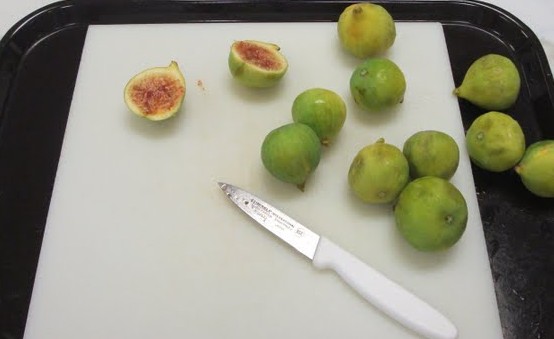
Whole and sliced figsFigs can be perfectly ripe when you pick them from the tree, then just a few days later they are notably far less appealing. With an extensive history of cultivation and consumption, fig trees provide us with fruit that is often preserved in order to extend its revered but fleeting qualities of flavor and texture.

Although a fruit, figs also display a borderline pH value for preserving as an acid food. Most fruits are clearly acid foods, with a pH below 4.6. (Vegetables, by the way, tend to be low acid foods, with pH values above 4.6.) Just a few fruits, figs among them, naturally range in pH right around 4.6, making them a borderline acid/low acid food since the pH can go above 4.6. Therefore, to be safely processed in a boiling water canner, some acid needs to be added to figs to keep them safe from botulism risk. You will see in the recommendations below that lemon juice or citric acid must be added, in the amounts called for, to home-canned fig products.  These acidification levels were determined through research.

Here are a few tested recommendations for preserving figs to try the next time you find yourself with fresh figs on your trees, or in your hands:

Fig Preserves is the recipe to use if you want to keep the plump fruits whole. This is a traditional southern-style whole fruit preserves, not a spread like jam. Fig Jam without added pectin directs you to chop the figs, and contains less sugar and less lemon juice than its crushed-fruit, pectin-added counterpart, Fig Jam with liquid pectin. If you’re willing to mix fruit flavors, then you might like to try Strawberry-Fig Preserves, which uses gelatin to help obtain a gel.

Another option for canning is to make Fig Pickles!

You may also choose to Freeze your figs. Unlike when canning, acid does not need to be added to figs in order to safely freeze them. However, it is suggested that lemon juice or ascorbic acid is added for the purpose of preventing discoloration and maintaining the highest quality of the figs.

Fresh fig halves on dryer trayFigs are excellent fruits for drying. To dehydrate figs, select fully ripe fruit and wash or clean the whole fruit with a damp cloth. Leave small fruit whole, and cut larger fruit in half. You should pretreat figs to be left whole by “checking” them.  Dip them in boiling water for 30 seconds or until skins split, then plunge them in ice water to stop further cooking. Be sure to drain them well on paper towels before loading them onto dehydrator trays and drying them for 6 to 12 hours.  The moisture inside the figs needs an escape route for drying out before intact skins would get too tough and dry.

Dried green figs

To learn more about dehydrating, please read Preserving Food: Drying Fruits and Vegetables.