Category Archives: Recipes

How do you like your eggs? Scrambled, Fried…or Pickled!

Whether your eggs come from your backyard chickens, the grocery store, or the Easter bunny, you might find yourself looking for different ways to prepare and preserve your abundance of springtime eggs.

There are no tested, reliable home canning recommendations for keeping pickled eggs at room temperature that we are able to recommend. Eggs are a low-acid food, and it is possible for botulism to grow in areas of a boiled egg that have not been sufficiently saturated by vinegar. The density, thickness, and very low acidity of eggs (pH ranges between 6.4 and 9.0) all present challenges for adequate penetration of vinegar and sufficient acidification throughout all areas of each egg. To read more about a case of home-pickled eggs implicated as a cause of botulism in Illinois in 1997, click here.

Instead of going through the steps of a canning process, simply make delicious pickled eggs safely at home by following recipes and instructions designed for refrigerator storage. Be sure to wash all utensils and surface areas (including hands) very well and sanitize jars for 10 minutes in boiling water before filling with boiled eggs if you expect to keep them for more than several days. Keep pickled eggs refrigerated, and limit their amount of time out of the fridge to 2 hours or less. Give them about 2 weeks to season in the brine before tasting. Unless otherwise indicated, you’ll want to consume refrigerated pickled eggs within 2 to 3 months for best quality. You can find more pickling tips and recipes on the NCHFP website.

refrigeratorHere is a basic recipe, copied directly from the pages of So Easy to Preserve:

Refrigerated Pickled Eggs

16 fresh eggs

2 TBSP whole allspice

2 TBSP whole peppercorns

2 TBSP ground ginger

4 cups white vinegar (5%)

2 TBSP sugar

Cook eggs in simmering water for 15 minutes. Place eggs in cold water, remove shells, and pack into sterilized jars. In a pot combine vinegar, sugar, and spices. Bring to a boil, reduce heat, and simmer 5 minutes. Pour hot liquid over hard-boiled eggs. Seal. Store in refrigerator. Use these pickled eggs within a month. This recipe is not intended for long term storage at room temperature.

Recipe from: Andress, E.L., Harrison, J.A., eds. (2006). So Easy to Preserve, 5th ed. Athens, GA: University of Georgia Cooperative Extension. ©University of Georgia.

Melt-in-your-Mouth Lemon Curd

lcurdbowl6

Although not meant to be a part of your everyday diet (you’ll see why when you consider the ingredients list), lemon curd sure is a special treat! A traditional English sweet spread, curds work well as a topping on cakes, cookies, and scones or as filling in pies and tarts. You could spoon it onto cream cheese for a unique dip or simply drip it over ice cream or frozen yogurt.

Making lemon curd is somewhat challenging, so if you are a novice then you might want to recruit help from a more experienced cook. And, as usual, if you are new to canning then please read step-by-step instructions on Using Boiling Water Canners and Principles of Home Canning.

frozen l curd

You can prepare this lemon curd to be consumed fresh, frozen, or canned. You could even make Lime Curd instead, substituting the lemon juice and zest for equal parts lime juice and zest. Either way, fresh curd needs to be refrigerated and eaten within 4 weeks, frozen curd will maintain best quality for up to a year, and canned curd for just 3 to 4 months.

The procedure for making lemon curd is an exacting process. Low-acid foods make up a significant portion of the ingredients (butter and eggs), so it is especially important to follow a tested recipe and canning process time for safety’s sake. Instead of detailing each step of the procedure here, please review the ingredient and equipment lists below, and then use these links for complete instructions from the National Center for Home Food Preservation: Canned Lemon Curd and Preparing and Preserving Lemon Curd (frozen).

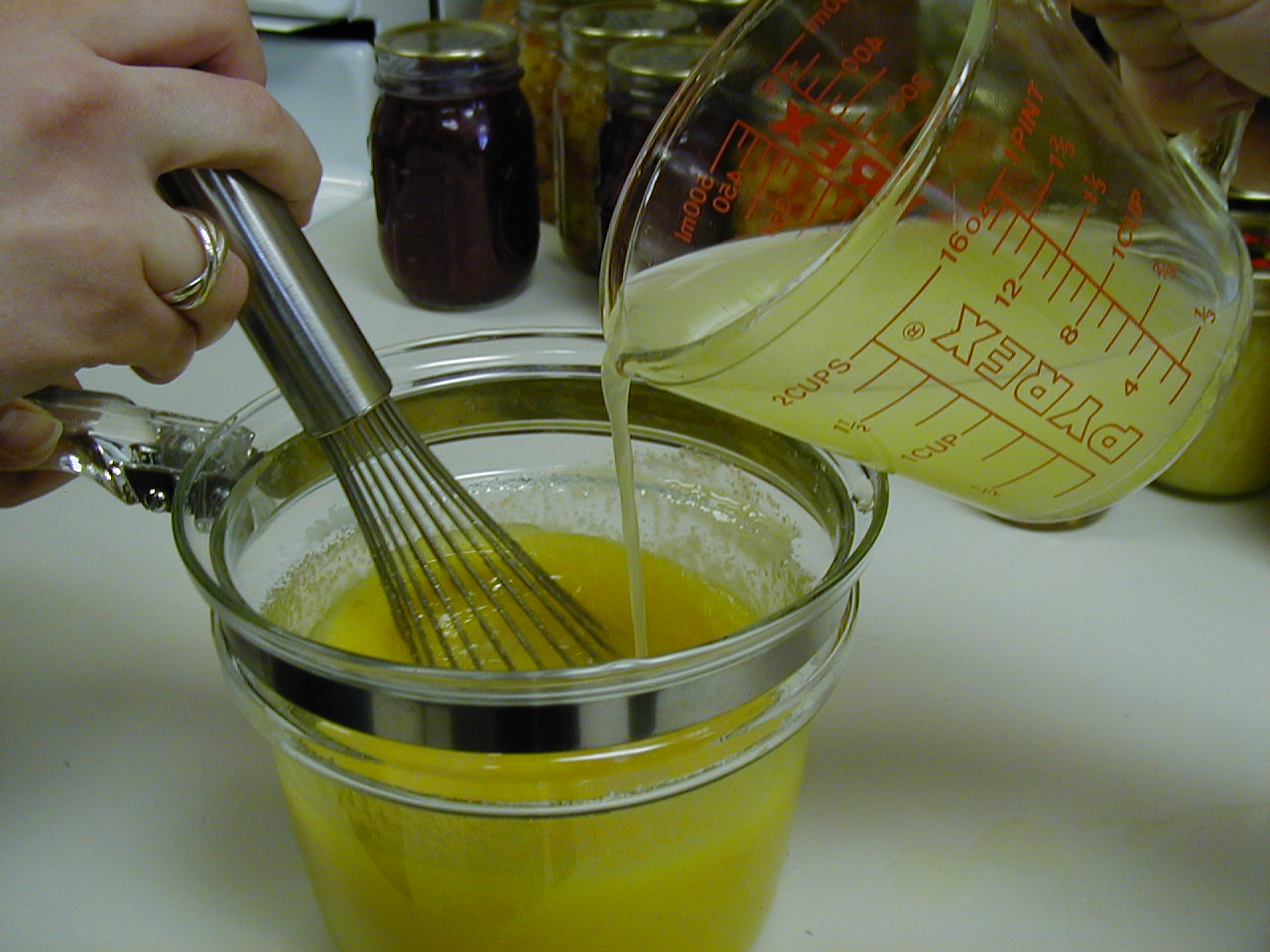
l curd ingredientsl curd whisking

Lemon Curd, canned or frozen

Ingredients:

2½ cups superfine sugar (or grind granulated sugar in a food processor for one minute)

½ cup lemon zest (optional)

1 cup commercially bottled standard lemon juice (needs to be bottled for consistent pH)

¾ cup unsalted butter, chilled and cut into approximately ¾-inch pieces

7 large egg yolks

4 large whole eggs

Equipment needed:

lemon zester

small mixing bowl

balloon whisk

1½ quart double boiler

mesh strainer

kitchen thermometer measuring at least up to 180°F

silicone spatula or cooking spoon

dish cloth or towel

medium-sized glass or stainless steel mixing bowl

1 quart-sized or 2 pint-sized freezer containers and plastic food wrap (only if freezing)

3 to 4 half-pint canning jars, lids, and ring bands and a boiling water canner (only if canning)

This entry was inspired by the season, the Valentine’s Day holiday (because lemon curd makes an impressive gift whether fresh or preserved) and by the article Preserving and Preparing Lemon Curd by Elaine M. D’Sa.

Brighten Up your Days with Marmalades

Cold temperatures and gray skies may be begging you for uplifting treats this winter. When you’re not up for braving the conditions outside, why not get busy in the warmth of your own kitchen? Making marmalades is not only fun to do, but there will also be plenty of delicious cheer to share with neighbors and visitors!

Most of these recipes do not require any additional pectin, as there is enough natural pectin in the ingredients. Pectin is a fiber found in the cell walls of many fruits and vegetables, though its content varies widely. Pectin is water-soluble, enabling it to form a gel-like compound that characterizes jellied products when combined with certain proportions of water, acid and sugar. In general, citrus fruits contain the most pectin, although apples, peaches, berries, and a few other fruits also contain a lot of pectin in their skins. Specifically, the most pectin is found in the white membrane located just under the skin of citrus fruits.

Oranges

For a super citrusy taste experience with grapefruit, orange, and lemon, try Citrus Marmalade.

If you still have apples from your harvest or can find a high-quality, tart variety at a grocery store, then you might like Apple Marmalade.

Pull out your frozen peach slices or look for peaches in the fresh or frozen sections of the grocery store to make this Peach-Orange Marmalade.

Warm spices (cinnamon, clove, and allspice) make Tomato Marmalade a unique seasonal specialty.

Cranberry Marmalade is a holiday favorite; just make sure you have a box of powdered pectin on hand.

jar of preserves

How to Preserve Health, Wealth, and Luck

Are you starting your New Year with a hearty meal of black eyed peas, collard greens, and pork? Southern tradition decrees that consuming these three foods has the power to bring personal health, financial prosperity, and good fortune throughout the year. To enjoy these foods sometime later in the year (and maybe even boost your chances of health, wealth, and luck), can them!

Follow the recommendations below to can your foods safely, and remember that tested recipes are meant to be followed exactly as is — in other words, if your own recipes differ from these recommended recipes, then you can eat those foods fresh and also make separate batches following these recipes and instructions for canning.

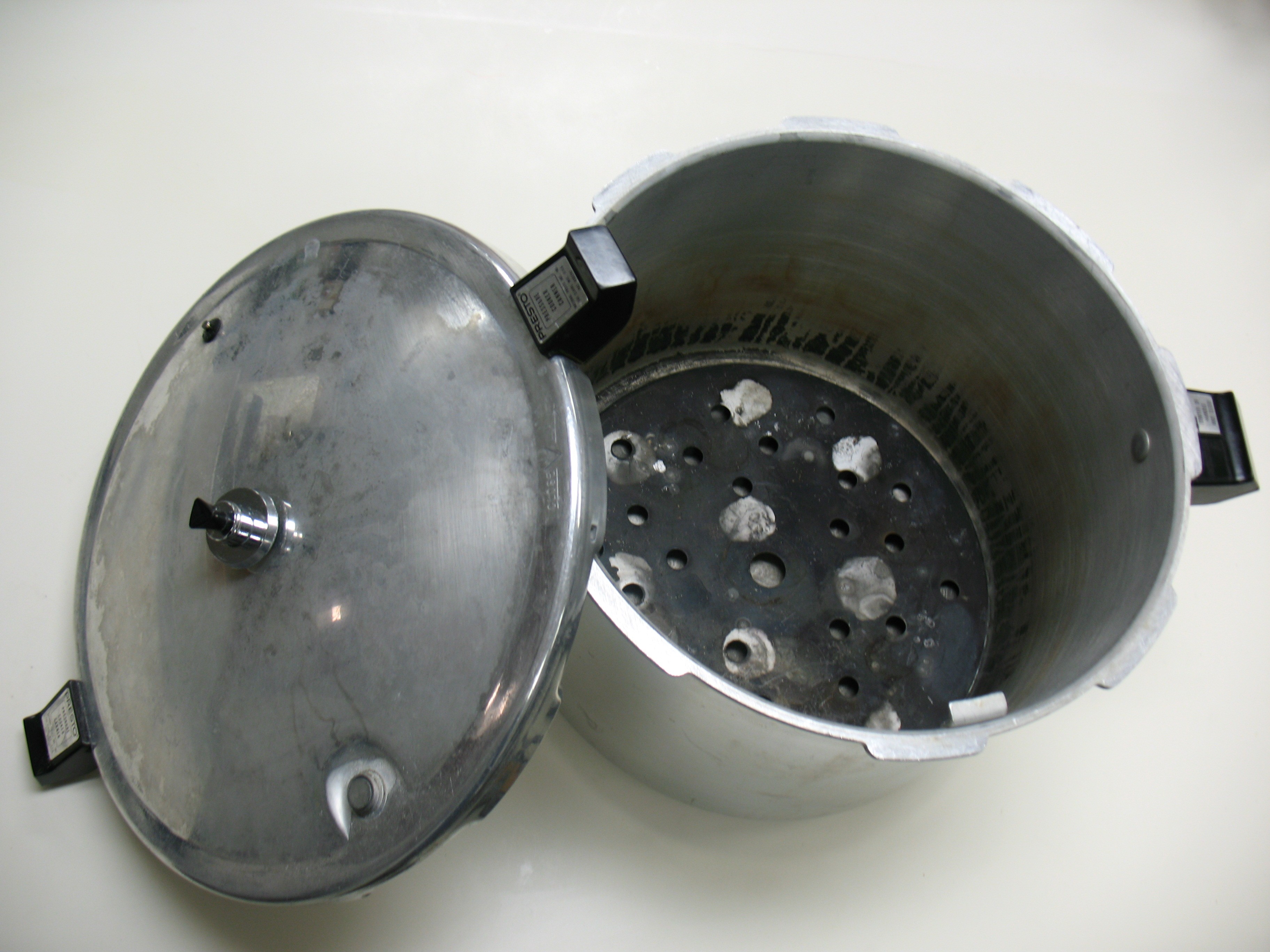
Presto Pressure Canner

Canning these low-acid foods requires use of a pressure canner. This is very important to the safety of your final product because if low-acid foods are not canned properly in a pressure canner then there is risk of botulism, a potentially fatal food poisoning. The amount of time in the canner is also extremely important to ensuring that harmful bacteria (like botulinum bacteria) are destroyed. Our recommendations have been carefully tested in a laboratory to determine the exact amount of time required for each different food, and that length of time can vary quite a lot among foods types. Each recipe and procedure includes a process time for canning.

A good example of noting the variation in process times is with canning black eyed peas. Are your black eyed peas dried or fresh? Your answer to this question makes a difference in how long you will process the filled jars.

Dried black eyed peas must be hydrated before canning. To rehydrate, soak dry peas for 12 to 18 hours then drain, or for a quicker method, cover with water in a stockpot and boil for 2 minutes, remove from heat, soak one hour, and drain. Whether you choose the quicker method or the overnight method, peas must then be covered with fresh water and boiled 30 minutes before being filled into jars. Process time is 75 minutes for pints and 90 minutes for quarts. Complete directions for Canning Dried Black Eyed Peas, including the amount of headspace required and altitude adjustments, are available from the NCHFP.

Fresh black eyed peas do not require as long of a process time as dried peas. Pints are processed for 40 minutes and quarts for 50 minutes. Fresh black eyed peas may be packed raw or hot. Specific directions for Canning Fresh Black Eyed Peas are available in a publication called ‘Preserving Food: Canning Vegetables’ from the University of Georgia. Recommendations for fresh black eyed peas are listed near the bottom of page 5 as ‘Peas: Blackeye, Crowder, Field’ .

You want collard greens to be fresh, tender and richly colored for canning. Discard any wilted, discolored, diseased, or damaged leaves and cut out tough stems and midribs so that they are ready-to-eat from the jar. You will also blanch the leaves briefly before putting in jars, as described in detail here: Canning Spinach and Other Greens.

Pork can be prepared as a raw pack or a hot pack for canning. Remove excess fat, as it goes rancid most easily. A raw pack means that you will simply cut the pork into strips, cubes or chunks, add salt to jars if desired, and then fill jars with the small pieces of pork until 1-inch headspace remains. Liquid that is naturally stored within the meat will exude when heated, but sometimes there is not enough liquid to fully cover the meat, which can lead to discoloration of the uncovered portions. A hot pack calls for precooking the meat and then adding boiling broth, drippings, water, or tomato juice after filling the jar with the meat, better ensuring that it will be fully covered after the canning process. The choice between a raw pack or a hot pack is up to you, but follow these recommended directions and process times either way: Canning Strips, Cubes, or Chunks of Meat.