Category Archives: Food Safety

Umm…what exactly is botulism? (Part II)

Botulism: Prevention

After reading last week’s entry you know where botulism comes from and the effects it has on people. But perhaps even more importantly, are you confident that you know how to prevent it?

There are essentially two ways to prevent botulism: 1) thermal destruction (heating) of spores and 2) inhibiting spores from germinating into toxin-producing vegetative cells.

Even in favorable conditions, C. botulinum vegetative cells and toxin should be destroyed when held at the temperature of boiling water (212°F at sea level) for a relatively short period of time. There are some other inactivation heat processes available for different types of food, also.  However, C. botulinum spores are much more heat resistant and need temperatures much higher than boiling to be killed in  reasonable times.  For home canning, we use temperatures of 240°F or above. It is very important to note that, unlike most bacteria, C. botulinum and other spores are NOT destroyed by normal cooking or boiling procedures. The spores require higher temperatures (240°F or above) that properly operated pressure canners create.

dial=gauge pressure canner

To prevent botulism, use approved processing methods and times as recommended by USDA. Carefully follow recommendations for pressure canning low acid foods. If you are still concerned if you did everything right, you can boil home-canned products in a saucepan on the stove for ten minutes before serving (add one minute more for each 1,000 of elevation).

Also remember that C. botulinum spores cannot germinate and then produce the toxin in pH levels of 4.6 or below. Acid foods and properly acidified food products have pH levels equal to or less than 4.6, so the toxin formation is prevented. Examples of acidified foods include pickles to which vinegar is added and salsa to which lemon juice is added.
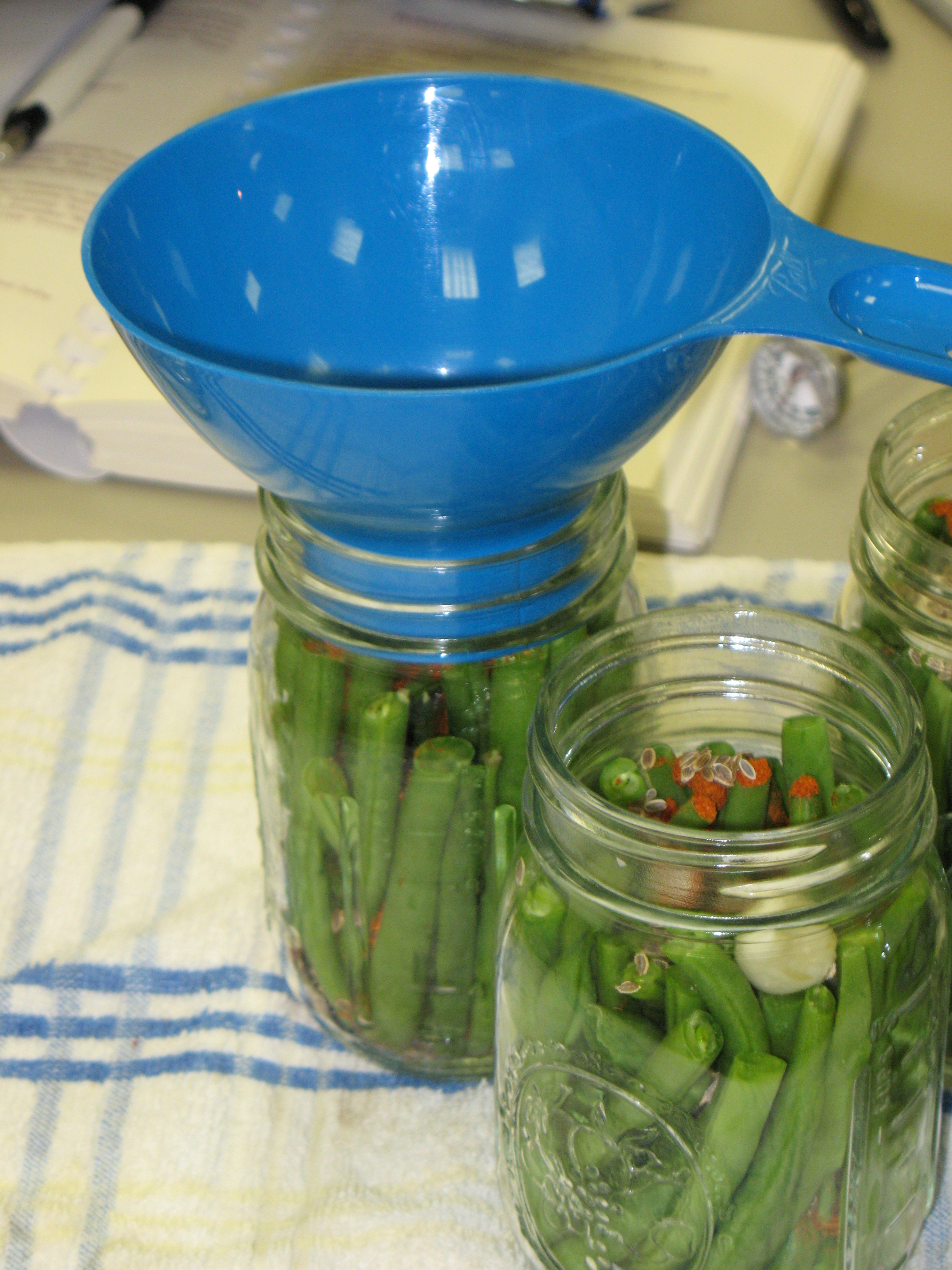
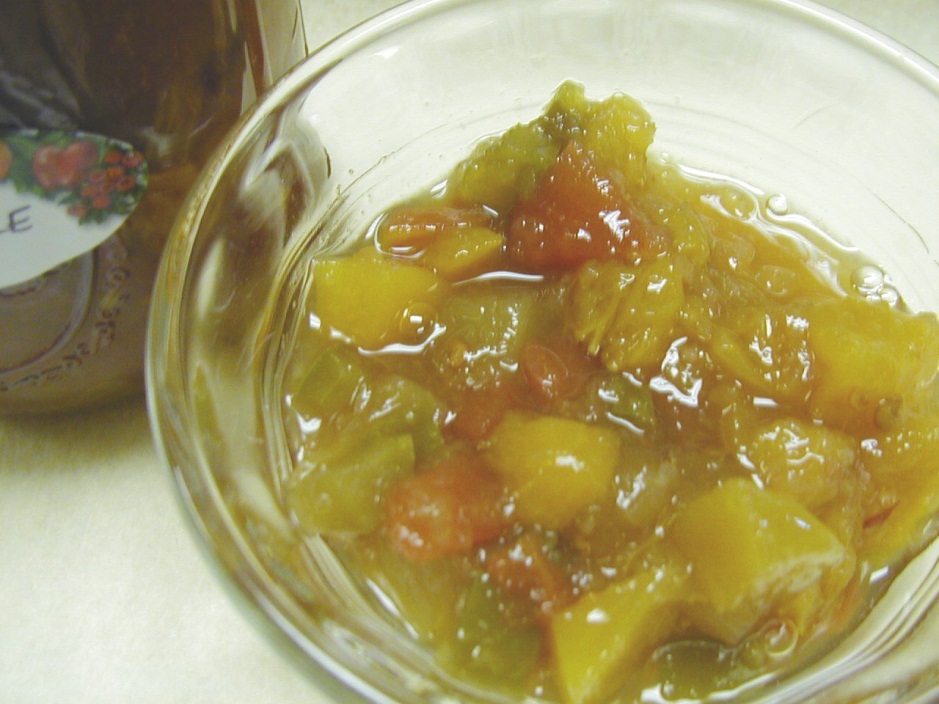
pickled green beanspeach apple salsa

You can further help prevent botulism and other foodborne illness by practicing general food safety; refrigerate all leftovers within 2 hours after cooking, and after just one hour if temperature is above 90°F. Discard, without tasting, any containers of food that are swollen, bulging, leaking, or cracked. Also immediately discard any product that spurts liquid or foam from a container once opened (unless it’s carbonated and shaken, of course).

Information in the entry comes from the USDA factsheet Clostridium botulinum and So Easy to Preserve.

Umm…what exactly is botulism? (Part I)

Glad you asked. This question is going to be answered in three parts, because it’s rather hefty, but very important to home food preservers, especially people who like to make canned products. The next three entries will cover the topics of Botulism: Sources (what it is and what it does), Botulism: Solutions (how you can prevent it), and Botulism: Surprises (did you know…).

Botulism: Sources

You’ve probably heard of botulism, and you likely know it’s a deadly foodborne disease. But do you know what causes botulism and how it works?

Let’s start by examining the source of botulism: rod-shaped bacteria called Clostridium botulinum. This microorganism is commonly found in soil and in marine sediment. It exists in two forms: as protected structures called spores, and as vegetative cells. To picture these forms, you could imagine spores like seeds and vegetative cells like sprouting plants.

C. botulinum spores are extremely common in soil and marine sediment, and therefore are also commonly found on the surfaces of fruits, vegetables, and seafood. Spores are generally harmless to adults (but can be harmful to infants; more about that later). The spore stage is formed when the bacteria are in an environment they find unfavorable; it is a protective stage that keeps the cell dormant or inactive but allows it to survive. When conditions are favorable, spores germinate into vegetative cells. Active vegetative cells are able to colonize and produce deadly botulinum toxin.

So what are those favorable conditions that allow the growth of C. botulinum?  Very low oxygen (such as in a sealed canning jar) and low acidity, meaning a pH value of 4.6 or above (such as in meats, vegetables, and some tomatoes, figs, and Asian pears).  That is why home food preservers need to be informed about Clostridium botulinum— you are not only dealing with the bacteria, but also the conditions ripe for them to grow out and produce toxin.

jars of veggies

What are the signs and symptoms of botulism? When consumed by humans, the neurotoxin produced by vegetative cells binds to nerve endings that join muscles, preventing muscles from contracting. Symptoms begin with nausea, vomiting, weakness, and dizziness which usually appear 12-36 hours after consuming the toxic food. Next are neurological symptoms such as blurry vision, difficulty speaking and swallowing, and lack of muscle coordination. Eventually the diaphragm and chest muscles become affected, which prevents breathing and results in death from asphyxia.

Can you do anything to stop botulism once the illness begins to affect the human body? Quick medical attention and injection of antitoxin can stop, but rarely reverse, nerve damage. Also, the antitoxin cannot always be used due to serious side effects.

Information in the entry comes from the USDA Factsheet Clostridium botulinum and So Easy to Preserve.

If you haven’t stored your pressure canner for the season…

Cans of Tomato Veggie Soup

…then it’s a great time to can soups! (And of course, even if you thought you were done for the season and have put it nicely away in storage, then you can still pull it back out.)

To warm up these wintry days, prepare and preserve your favorite mix of vegetables, beans or peas, meat, poultry or seafood into a hearty soup. In order to produce a safe preserved product with these low-acid foods, you’ll need to use a pressure canner. You’ll also want to follow these recommendations from USDA:

If this is your first time canning or you admit that you could benefit from a refresher of the basics, please first read Using Pressure Canners and Principles of Home Canning.

Jars of soup in pressure canner

It is important that you DO NOT add noodles or other pasta, rice, flour, cream, milk, or other thickening agents to your home canned soup. These ingredients effect the heat penetration of the jars during processing and USDA does not offer recommendations for their use. Also, if you do choose to use dried beans or peas, you MUST fully rehydrate them first so as not to alter the measurement of water in the final products.

The procedure is fairly simple: select, wash, and prepare vegetables, meat, and/or seafood as you would for a hot pack. For more information about preparing for hot packs, refer to So Easy to Preserve or the National Center for Home Food Preservation website. If you are including meat, then cover meat with water and cook until tender. Cool the meat and remove any bones. If you are using dried beans or peas, then add 3 cups water for each 1 cup of beans or peas, boil 2 minutes, and then remove from heat. Soak for 1 hour, then again heat to a boil, and drain.

Soup filled jars half and half

In a large stock pot, combine solid ingredients with enough broth, tomato juice, or water to cover them. Boil 5 minutes. Add salt (or other dried spices) to taste, if you like. Fill jars halfway with solid mixture, and then add the remaining liquid, leaving 1-inch headspace. Adjust lids and process using the tables below.

Original sources for this entry come from the National Center for Home Food Preservation website and So Easy to Preserve .

Recommended process time for Soups in a dial-gauge pressure canner.

Canner   Pressure (PSI) at Altitudes

Style   of Pack

Jar   Size

Process   Time

0-2,000ft

2,001-4,000ft

4,001-6,000ft

6,001-8,000ft

Hot

Pints

60* min

11   lb

12 lb

13 lb

14 lb

Quarts

75* min

11   lb

12 lb

13 lb

14 lb

* Caution: Process 100 minutes if soup contains seafoods.
Recommended process time for Soups in a weighted-gauge pressure canner

Canner   Pressure (PSI) at Altitudes

Style   of Pack

Jar   Size

Process   Time

0-1,000ft

Above   1,000ft

Hot

Pints

60* min

10   lb

15 lb

Quarts

75* min

10   lb

15 lb

* Caution: Process 100 minutes if soup contains seafoods.

What you can do when you can’t can

Now that you know better than to can nut meats (except for green peanuts), what will you do to preserve those delicious fresh pecans, chestnuts, and other nuts? For ease and satisfaction, freeze!

Here are freezing tips specific to a few different types of nuts:

Chestnuts

Select fully mature chestnuts and slit their shells to prevent exploding during heating. Spread chestnuts in a single layer on a shallow pan and heat in a 400°F oven for 20-25 minutes. Remove from the oven, cool, and package in a freezer bag, squeezing out as much air as possible before sealing. If you’d like extra protection, then double-bag with another freezer bag. Put in the freezer.

Pecans

To prevent brittleness while cracking, place nuts in a damp place overnight. Shell the nuts, keeping kernels as whole as possible. Spread in a thin layer to dry for 24 hours, then package in airtight containers and freeze.

Green (raw) Peanuts in the shell

Clean, wash, and rinse fully mature peanuts. Blanch the peanuts in boiling water for 10 minutes. Drain, cool, package in freezer containers then put in the freezer.

Raw peanuts in the shell or out of the shell can also simply be packaged in freezer containers and frozen.

Information in this entry comes from So Easy to Preserve by E.L Andress and J.A. Harrison. (2011). pp. 288-289. Cooperative Extension/University of Georgia.