Category Archives: Food Safety

Putting A Lid On Green Beans

IMG_1110Having a green bean emergency?! So many questions came in over this summer about canning green beans that it seems time to discuss what is and is not recommended for the process. No one wants to be told that they under-processed their precious jars of homegrown green beans and need to discard them to be safe, but unfortunately we’ve had to break the news repeatedly.

Let’s first address the most common and critical safety concern with canning green beans: “I canned my green beans using a boiling water bath…is that ok?”

Oftentimes upon the advice from a grandmother or neighbor, people make an attempt to can their green beans using a boiling water canner. BOILING WATER CANNING IS NOT A SAFE OPTION FOR GREEN BEANS. While stories may be told of how they’ve done it for years and never gotten sick, the risk of botulism is ever present in canned green beans that were processed in a boiling water canner. Such beans are under-processed, not having received a heat treatment at a high enough temperature to destroy the toxin-producing spores of Clostridium botulinum. The concern is real: under-processed green beans caused two outbreaks of botulism in the United States in 2008 and 2009.

The only process we support for canning green beans is using a pressure canner. Here are our recommendations for Canning Green Beans. The process itself is simple – wash, snap, boil, fill, process – but the use of a pressure canner is absolutely critical to ensure the safety of the beans. The pH of green beans (5.7 – 6.2) is well above the cut off that can be processed in a boiling water canner (4.6 or below).

IMG_4675If you do not have a pressure canner and do not plan to get one, you do have the delicious option of canning Pickled Dilled Beans in a boiling water canner. This recipe has enough vinegar that the overall pH of the product lowers to the safe zone for boiling water canning – also called acidification, or pickling. Don’t like pickled products? Try freezing your green beans or even drying them into a snappy snack!
What’s In Your Choice Salsa?

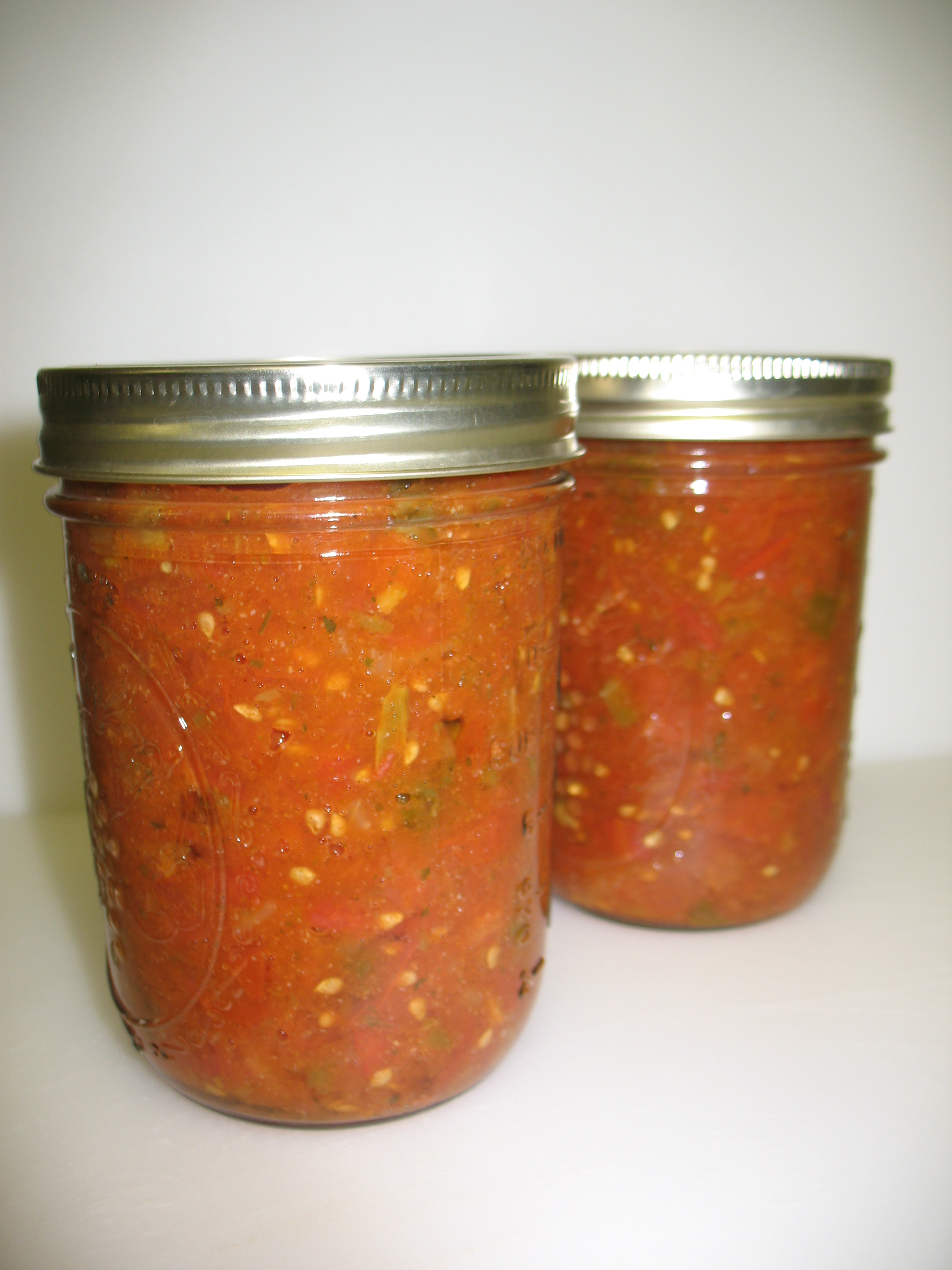
Salsa Easy to make and simple to can in a boiling water canner, salsas are very popular for home canning. One of the most common requests we receive at the National Center is “Can I can my salsa recipe?”

The answer is not what people usually want to hear…but the trouble with canning your own salsa recipes is that most recipes contain low-acid ingredients, and low-acid foods need to either be pressure canned or properly acidified by the addition of a strong acid (like lemon juice or vinegar) for boiling water canning. Either way, a process time needs to be determined for any particular recipe to ensure that spoilage or sickness-causing microorganisms will be destroyed (this time varies based on qualities like pH, solid-to-liquid ratio, size and shape of jar, etc.).

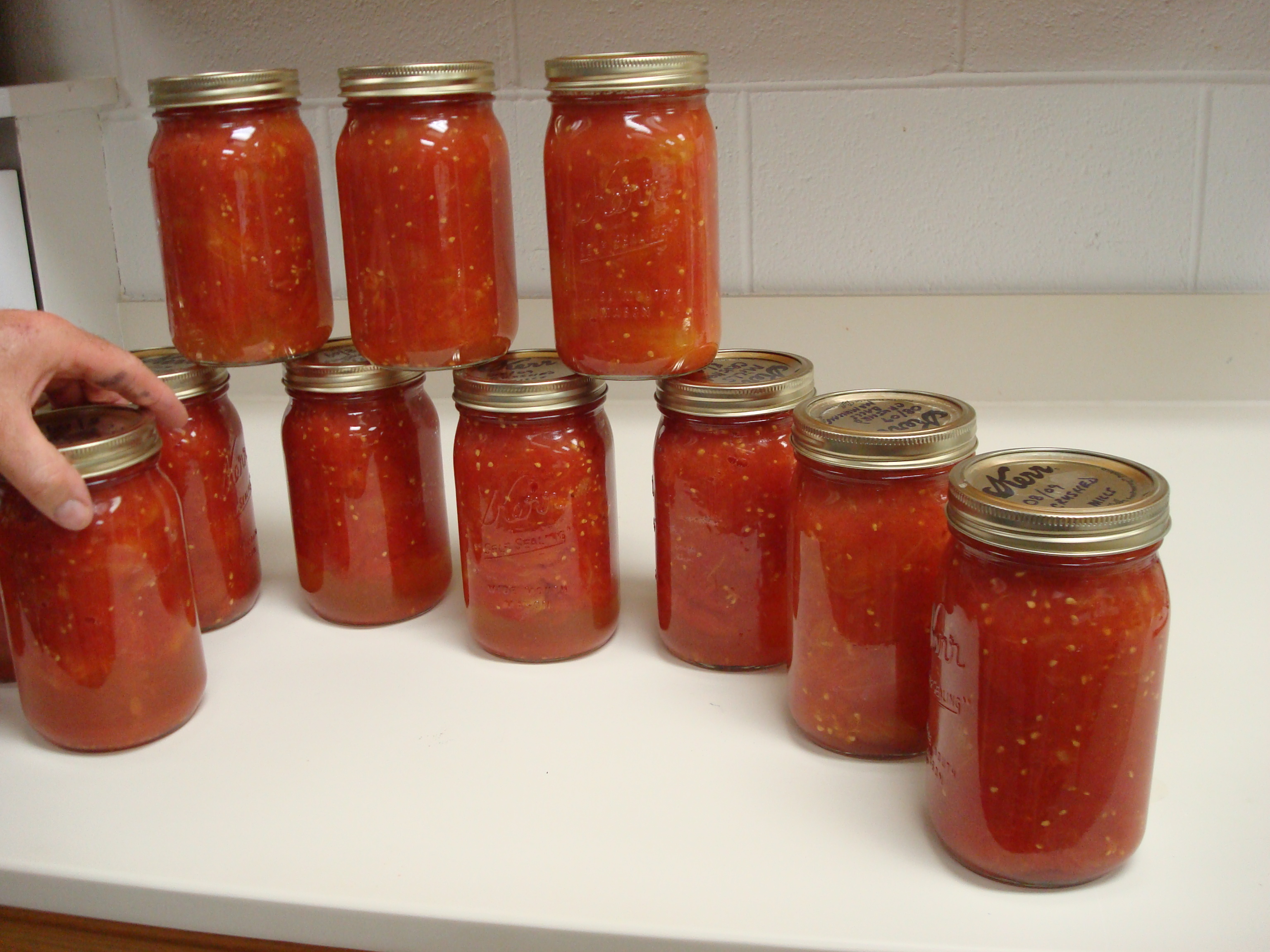
So then, we cannot recommend that just any homemade salsa recipe be canned. That’s why we have a variety of carefully tested salsa recipes for you to choose from. Safety first, but also quality, were given priority in developing these recipes, so we hope you will find at least one that you like. Crushed tomatoes

If the idea of following a recipe exactly is tough for you to swallow, then, well, you might want to consider taking up cooking instead of canning, but for now, you might also enjoy playing with our Choice Salsa recipe. This recipe was developed to allow for a great deal of flexibility – you can use any variety of onions and peppers so long as you use a total of 9 cups diced onions and/or peppers per batch. The only other ingredients you need are 6 cups chopped tomatoes, 1½ cups bottled lemon or lime juice, and 3 teaspoons canning or pickling salt. Remember to enjoy some fresh and refrigerate jars after opening!

Do I need to pre-sterilize my jars before canning?

Even when you purchase brand and shiny new jars in a box covered in plastic wrap, those jars are still not in a sterile environment. In addition to contamination by microorganisms that cannot be seen with our bare eyes, packaged jars may accumulate dust, small bits of debris, and even chips of glass in the case of breakage (which does happen sometimes in all the steps of transport from factory to store to home).

Whether brand new or re-used many times over, you should always clean jars just prior to filling them when canning. Wash jars in a dishwasher or by hand, using detergent and rinsing well. Clean jars should then be kept warm prior to filling.  You can leave them in the closed dishwasher after the cycle, place them in your canner as it is preheating, or create a separate water bath to keep jars clean and warm.

Washing is also a good time to inspect jars for any cracks or chips, discarding or re-purposing those jars for non-canning uses if any imperfections are found. If you see scales or film from hard water left on your jars, then remove this by soaking jars for several hours in a solution containing 1 cup of vinegar (5% acidity) per gallon of water.

burner on high for bringing water to a boilIn order to actually sterilize jars, they need to be covered by boiling water for 10 minutes (at sea level…see note about altitude adjustment, below). When a process time is 10 minutes or more, the jars will be sterilized DURING processing in the canner. Therefore, when process times are 10 minutes or more, pre-sterilization of jars is not needed. It doesn’t hurt your product to do it anyway, but it does require additional time and energy and is unnecessary.

To pre-sterilize jars, place the cleaned jars right-side-up on a rack in a canner and fill the jars and canner with water to 1-inch above the tops of the jars. Bring the water to a boil and then boil for 10 minutes at altitudes less than 1,000 feet elevation.  Add 1 additional minute for each additional 1,000 feet of elevation. When you are ready to fill the jars, remove the jars one at a time, emptying the water from them back into the canner.  This will keep the hot water in the canner for processing filled jars.

timer set to 5 minutesSometimes people choose to increase a 5-minute process time for certain jams and jellies to 10 minutes so that they do not have to pre-sterilize the jars.  The extra process time is not harmful to most gels and spoilage should not be an issue as long as the filled jars get a full 10-minute treatment in boiling water.  (And remember your altitude to increase this process time as needed.)

So, in summary:

Is a 5-minute process time enough to sterilize jars? No. If you are using a process time of only 5 minutes, such as for some jellied products, then you need to pre-sterilize jars before filling them (or increase the process time to 10 minutes, plus any altitude adjustments).

If a process time is 10 minutes or more (at sea level) then will the jars be sterilized? Yes, but be sure to wash and rinse them well, and keep warm, before filling them with food.

Do you have a smooth cooktop and still want to can at home?

smooth stove top drawing


If you have a smooth cook-top and the manufacturer says not to can on it, don’t give up on canning at home quite yet. Consider these alternatives instead: either purchase and install a permanent set of electric coil or gas burners as a range top (without an oven) or purchase a portable electric coil or gas burner.

Cost is one notable difference between the two options. An installed range top can be quite expensive as a second range top, especially as it requires proper utility connections to support it.

As for portable burners, they are not all alike and not all portable burners are appropriate for canning.  Before buying or using a any burner for canning, check the manufacturer’s product information or contact their customer service to find out if that particular burner is appropriate to use for canning.

We cannot endorse a particular brand, but here are a few basic guidelines for you to keep in mind when selecting a portable burner for canning purposes:

– The burner must be level, sturdy, and secure. Look for enough height to allow air to flow under the burner, but not such that it will become unsteady with a full, heavy canner resting on it. One we have tested was about 4 inches high off the counter top, on short legs that allowed air circulation underneath but was plenty stable.

– Look for a burner diameter that is no more than 4 inches smaller than the diameter of your canner. In other words, the canner should not extend more than 2 inches from the burner on any side. This is a common recommendation, but also make sure this is the recommendation for your canner and burner brand.

– For electric burners, you want the wattage to be about equal to that of a typical household range large burner.  We have been successful bringing a boiling water canner to boiling with one that is 1500W/120V, but household range burners are more typically 1750W or higher and this kind of wattage may actually be a better choice if you can find it. We have not yet tried using a pressure canner on a portable electric burner.

– You want the burner to have housing that will hold up to the high heat under the canner for long heating periods, and not damage counter tops with reflected heat. We contacted a food-service supply store to help us identify one like this; it cost us about $155. We used it successfully a few times to bring water to a boil, but have not used one repeatedly for canning.

– At least one pressure canner manufacturer advises not to can on an outdoor low pressure gas burner/gas range burner over 12,000 BTU’s. Your pressure canner can be damaged if the burner puts out too much heat. Higher BTU burners could also produce so much heat that the recommended come-up time for canning could be altered, potentially producing an unsafe final product.

– Again, check manufacturer’s directions and/or contact their customer service for more information about appropriate burners. When you are asking manufacturers about canning, specify whether you are asking about pressure canning (much more heat concentration) or boiling water canning. If the manufacturer’s directions have been followed, and canning problems occur, then you must take it up with the manufacturer.