Category Archives: Canning

Quick, Ketchup with all those Tomatoes!

Do you have more tomatoes than you know what to do with? Try making your own ketchup. A classic condiment that can be found in most American households, you might like your homemade ketchup so much that you never buy another bottle at the grocery store again. The flavorful spices in these recipes might also inspire you to try the tomato-based sauce on more than just burgers and fries.

USDA has tested three slightly different recipes for you to choose from: Tomato Ketchup, Blender Ketchup, and Country Western Ketchup. What’s the difference? The steps of making the products are almost identical, but the ingredients, and therefore flavors, vary. Country Western Ketchup has a spicy kick due to chili peppers, cayenne pepper, and whole peppercorns. Blender Ketchup uses sweet bell peppers, cinnamon sticks, and a lot more sugar than the others. Tomato Ketchup sits in balance between the two, and is the most traditional of the bunch. Like the Country Western it has cayenne pepper, and like the Blender it has cloves, but it also uniquely adds onions to the mix.

In addition to the ingredients, you’ll also need to gather a few pieces of equipment:

  • Four-burner gas or electric stovetop range
  • Boiling water canner with rack
  • 4-gallon stockpot or large kettle for checking tomatoes then heating all ingredients together (“checking” means splitting the skins)
  • Large bowl or sink filled with ice water (to dip checked tomatoes)
  • Chef’s knife
  • Cutting board
  • Spice bag
  • Food sieve or food mill (for Tomato Ketchup and Country Western Ketchup), or a blender (for Blender Ketchup)

Follow these links (same as above) to read the complete directions for making Tomato Ketchup, Blender Ketchup, or Country Western Ketchup.
Since You Can’t Have Too Many Tomatoes…

Tomatoes

Just as the tomatoes in your garden grow and the varieties of tomatoes in markets continue to increase in number, we also encounter a generous assortment of directions for canning tomatoes. But canning your tomatoes does not have to be too complicated, if you simply use reliable, research-based directions for preparing and processing your food.

For example, home canned tomatoes may be crushed so that they are ready-to-use, or left whole or halved. Whole or Halved Tomatoes may be canned with water, in tomato juice, or with no added liquid. While the no-added-liquid version of canned tomatoes is a raw pack, Crushed Tomatoes are a hot pack only. Tomato Juice can be made as is or as a Tomato-Vegetable Juice Blend, as hot packs only. Also only available as a hot pack is Tomato Sauce.  Many more classic canned tomato product directions are available, such as Spaghetti Sauce with or without meat and Ketchup.

Canned Tomatoes

No matter how you choose to can your tomatoes, remember that it is very important to use a canning process time that matches up with the preparation directions for filling your jars. Also, it is important to the safety of your canned tomato products to use tested directions, like those from USDA. For many of these tomato products, there are canning options for both boiling water and pressure canning available in our directions.

In the case of these tomato products with both options, the pressure processing still requires acidification in these products. The pressure options only provide the same amount of heat to the product as the boiling water processes. Just because pressure is used to decrease the process time, the canning process is not the same as one to destroy spores of Clostridium botulinum as you would expect for low acid foods.

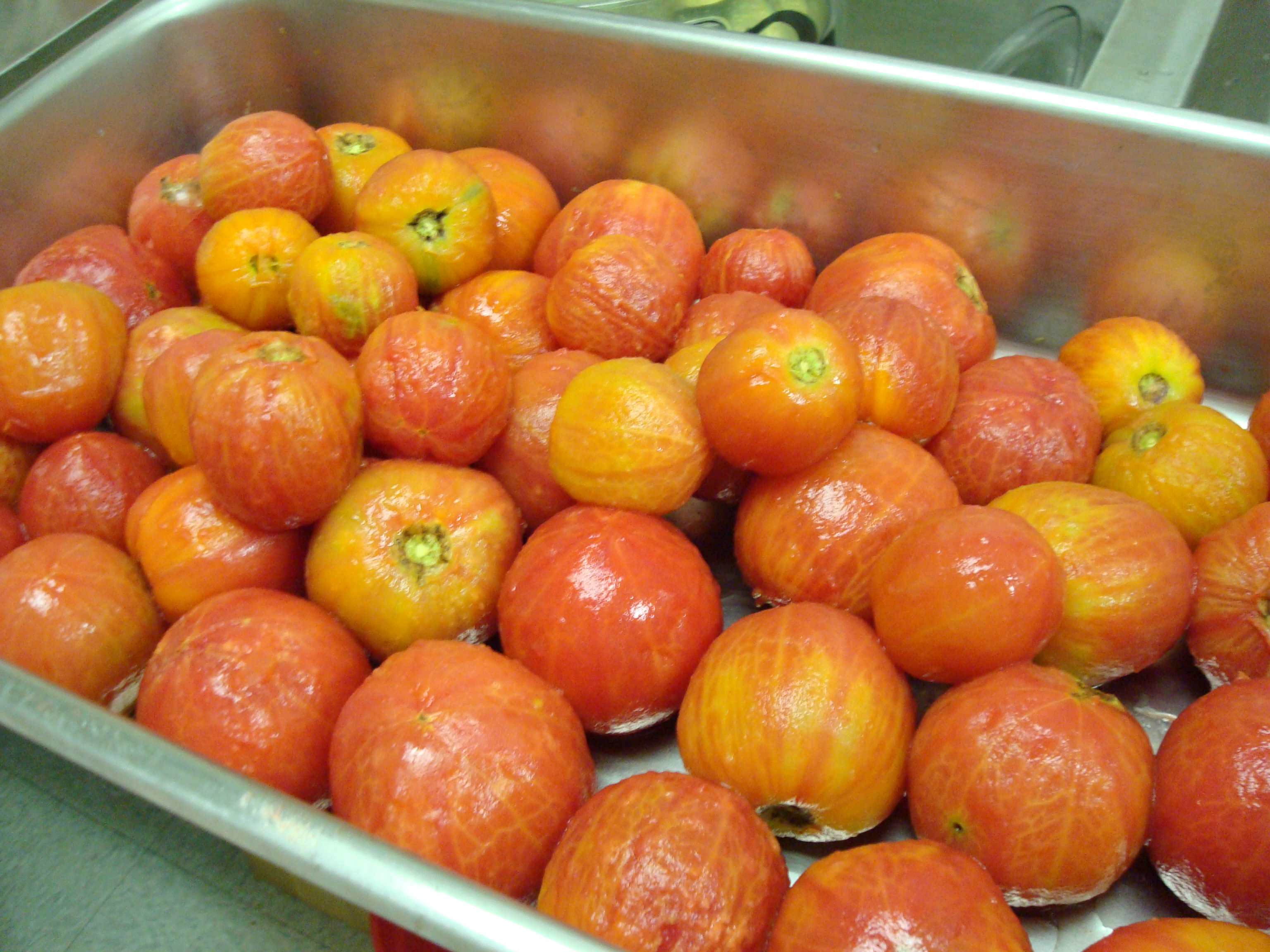
Peeled Tomatoes

Tomatoes are borderline in pH between acid and low acid foods, so the USDA preparation directions for these products call for acidification to allow a less severe heat treatment than would be required without it. To ensure safe acidity in whole, crushed, or juiced tomatoes, add two tablespoons of bottled lemon juice or ½ teaspoon of citric acid per quart of tomatoes. (Citric acid results in a less noticeable change in taste for most people.) For pints, use one tablespoon bottled lemon juice or ¼ teaspoon citric acid. Acid can be added directly to the jars before filling with product; in fact, this is recommended to be sure you get the acid in each and every jar. Sugar may be added to offset an acid taste, if desired, but the acid cannot be decreased to taste. (Four tablespoons of a 5 percent acidity vinegar per quart may be used instead of lemon juice or citric acid. However, vinegar may cause undesirable flavor changes.)

The National Center for Home Food Preservation has recommended directions for canning tomatoes and tomato products under “How do I”….”Can”…..”Canning Tomatoes and Tomato Products“.

This entry contains excerpts from an article called “Sorting Out Tomato Canning Directions” written by Elizabeth Andress, PhD and Director of the National Center for Home Food Preservation.

For Fresh Rhubarb Pie All Year-Round

If you’re a fan of the tart, tangy flavor of rhubarb, then these preserving tips are for you. Once safely preserved, you’ll be able to add that one-of-a-kind taste to delicious pie, tart, and muffin recipes any time of year. You may even like to experiment with sauces or spreads. For a baked-good, sauce, and spread friendly product, try either canning or freezing your rhubarb according to the directions below.

If you are new to canning, or could use a refresher of the basics, then please read Using Boiling Water Canners and Principles of Home Canning before beginning.

Canning

Select young, colorful stalks and trim off the leaves. Wash and cut the stalks into 1/2 to 1 inch pieces. You’ll need to know how much rhubarb you have in order to figure out how much sugar to add, so measure your sliced rhubarb and then place in a saucepan. For each quart (4 cups) of rhubarb, add ½ cup sugar to a saucepan. Wait for juice to appear, and then heat gently to boiling. Immediately pack hot rhubarb mixture into hot jars, leaving 1/2 inch headspace. Release air bubbles, wipe jar rims, adjust lids, and process in a boiling water bath for 15 minutes. If you are using a pressure canning, please refer to the time tables at http://nchfp.uga.edu/how/can_02/rhubarb_stewed.html.

Freezing

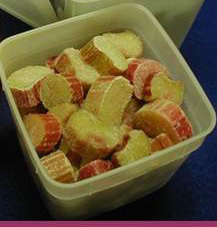
Rhubarb can be frozen with or without sugar syrup. Either way, begin by selecting tender stalks with few fibers. Wash and cut into lengths that fit your freezer packaging (air-tight, moisture proof plastic or glass containers). To help rhubarb retain color and flavor, heat it in boiling water for 1 minute and cool promptly in cold water.

trayfreeze

For a dry pack, tightly pack the raw or preheated rhubarb into containers, leaving ½ inch headspace. Seal and freeze. You could also tray freeze the slices in a single layer on a baking sheet just until hardened, then pack dry into your containers. Tray freezing is the best way to have loose slices easily removed from the package.

Frozen rhubarbThawed rhubarb

For a syrup pack, pre-make a  40% syrup: mix a proportion of 2 ¾ cups sugar to 4 cups lukewarm water and stir until the solution is clear. Chill syrup. Tightly pack the raw or preheated rhubarb into containers, and cover with cold 40% syrup. The amount of headspace needed depends on the size of the container and if its top is narrow or wide. See the table at http://nchfp.uga.edu/how/freeze/headspace.html to determine how much headspace you need.

Strawberry-Kiwi Jam Recipe

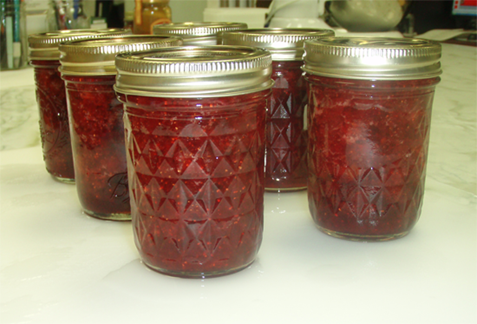
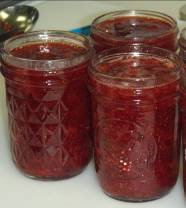
Strawberry Kiwi JamStrawberry-Kiwi Jam jars

Blending the local with the exotic, Strawberry-Kiwi jam is a flavorful extension of a classic strawberry jam. Strawberries are plumping up on farms in the southern states. If you’re farther north, then you might want to save this recipe for June or July when you’ll have fresh berries of your own. Or, you can pluck some strawberries off a shelf at the grocery store while you are purchasing the more exotic ingredients that most likely don’t grow close to home: kiwis and (crystallized) ginger.

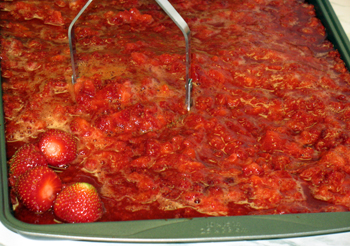
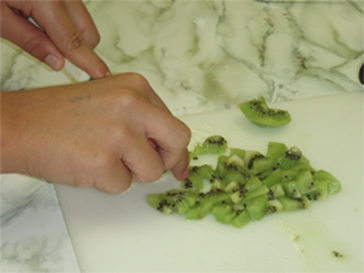
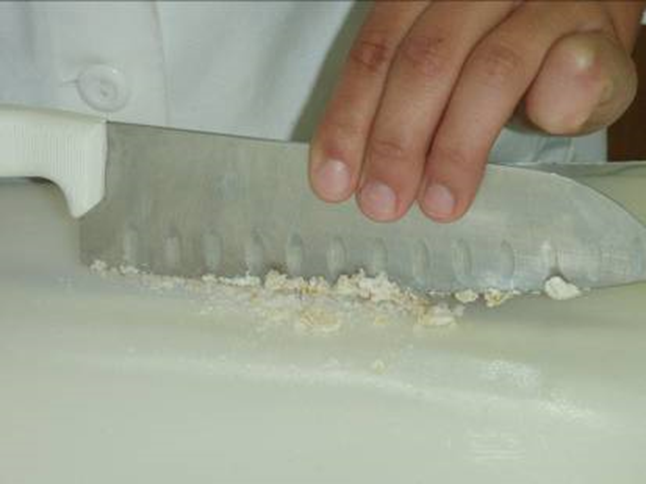
Crushing StrawberriesChopping KiwiMincing Crystallized Ginger

Strawberry-Kiwi jam is a slightly tangy, subtly spicy, but mostly sweet jam. It goes great on toast, and if you like to bake then try it in thumbprint cookies or with cake. Home canning beginners may want to follow the illustrated instruction guide available here: Step-By-Step Preserving Strawberry-Kiwi Jam. Please also read Using Boiling Water Canners and Principles of Home Canning before beginning. For those of you already comfortable with the basics, here’s the recipe from the University of Georgia publication So Easy to Preserve:

Strawberry-Kiwi Jam with powdered pectin

Makes about 6 half-pint jars

–          3 cups crushed strawberries

–          3 kiwi, peeled and diced

–          1 tablespoon lemon juice

–          1 tablespoon minced crystallized ginger

–          1 package powdered pectin

–          5 cups sugar

Procedure:

  1. Wash canning jars and keep warm.
  2. Prepare two-piece canning lids according to manufacturer’s directions.
  3. Combine strawberries, kiwi, lemon juice, ginger and pectin in a large saucepot. Bring quickly to a boil, stirring frequently.
  4. Add sugar, stirring until dissolved.
  5. Return to a rolling boil. Boil hard 1 minute, stirring constantly.
  6. Remove from heat. Skim foam if necessary.
  7. Ladle hot jam into hot jars, leaving ¼ inch headspace.
  8. Wipe jar rims and adjust lids.
  9. Process in a Boiling Water Canner using recommended process times in the table below.
Table 1.   Recommended process time for Strawberry-Kiwi Jam in a boiling water canner

Process   Time at Altitudes of

Style   of Pack

Jar   Size

0   – 1,000 ft

1,001   – 6,000 ft

Above   6,000 ft

Hot

Half-pints
or Pints

10   min

15 min

20 min

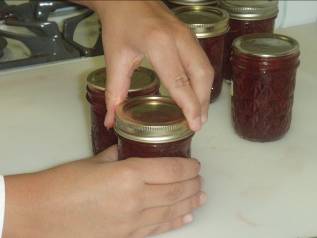
Open jars of jam Turning Until Fingertip Tight

If you’re not able to access the Step-By-Step instructions, then go to http://nchfp.uga.edu/how/can7_jam_jelly.html and click on “Step-By-Step Preserving Strawberry-Kiwi Jam”.