Category Archives: Canning

Are You Prepared for Severe Weather?

If the trials of this winter season have not already spurred you to carefully evaluate your severe weather preparedness, or perhaps if you are still feeling uncertain if you are as prepared as you want to be, then don’t think you’ve missed your chance – it’s never too late to prepare for the next severe weather event.  The National Weather Service declared the first week of March 2014 as Severe Weather Preparedness Week. In case you missed it, here’s a link to preparedness resources provided by the National Oceanic and Atmospheric Administration (NOAA).

Do you have a disaster supply kit yet? If not, you can use the disaster supplies kit link on NOAA’s site (above) to help you put one together to meet your particular needs. In addition to items like a flashlight and first aid kit, the Federal Emergency Management Agency (FEMA) suggests that you stock a disaster supplies kit with food supplies enough for 3 days and nights. If you chose foods that require heating, then remember to also pack a small camping stove and fuel.

Comfort foods like cookies, lollipops, and coffee are very useful for morale, but it’s important to primarily pack an assortment of nutrient-rich foods to sustain your health during the crisis. Store-bought canned fruits, veggies, soups and meats are good options, as are granola bars, peanut butter, and crackers. Some home-preserved canned foods also make a great choice, although you’ll want to pay extra attention to packing glass jars so they do not break, and keep in mind that they add weight as compared to metal cans. Conversely, dehydrated fruits and veggies make for a very light-weight option to help maintain your energy.

To maintain the usefulness and quality of your supplies, check expiration dates, batteries, and your own changing personal needs to re-stock your disaster supply kit at least once per year.

If you lose power, remember to first eat foods from your refrigerator and then from your freezer before turning to your supply kit. Eat your non-perishable foods only once your perishable supplies run out. Refrigerated foods need to be monitored at 40°F or below or else eaten quickly, as they may cause support microbial growth and cause sickness after just a few hours at temperatures above 40°F. Keep the refrigerator/freezer doors closed as much as possible and wrap it in blankets or towels to help hold in the cool air. Freezer foods can be consumed as long as they still have ice crystals and/or you can check that the freezer has remained at 40°F or below. Usually, you’ll have 2 to 3 days to eat freezer foods if the freezer is well-insulated.

More tips, including how to prepare a two-week supply, are found in this publication from the University of Georgia: Preparing an Emergency Food Supply, Short Term Storage. A collection of publications including Storing Water Supplies is available from UGA Cooperative Extension’s Consumer Guide: Preparing an Emergency Food Supply.
Why Can’t I Just Guess at a Process Time for Canning?

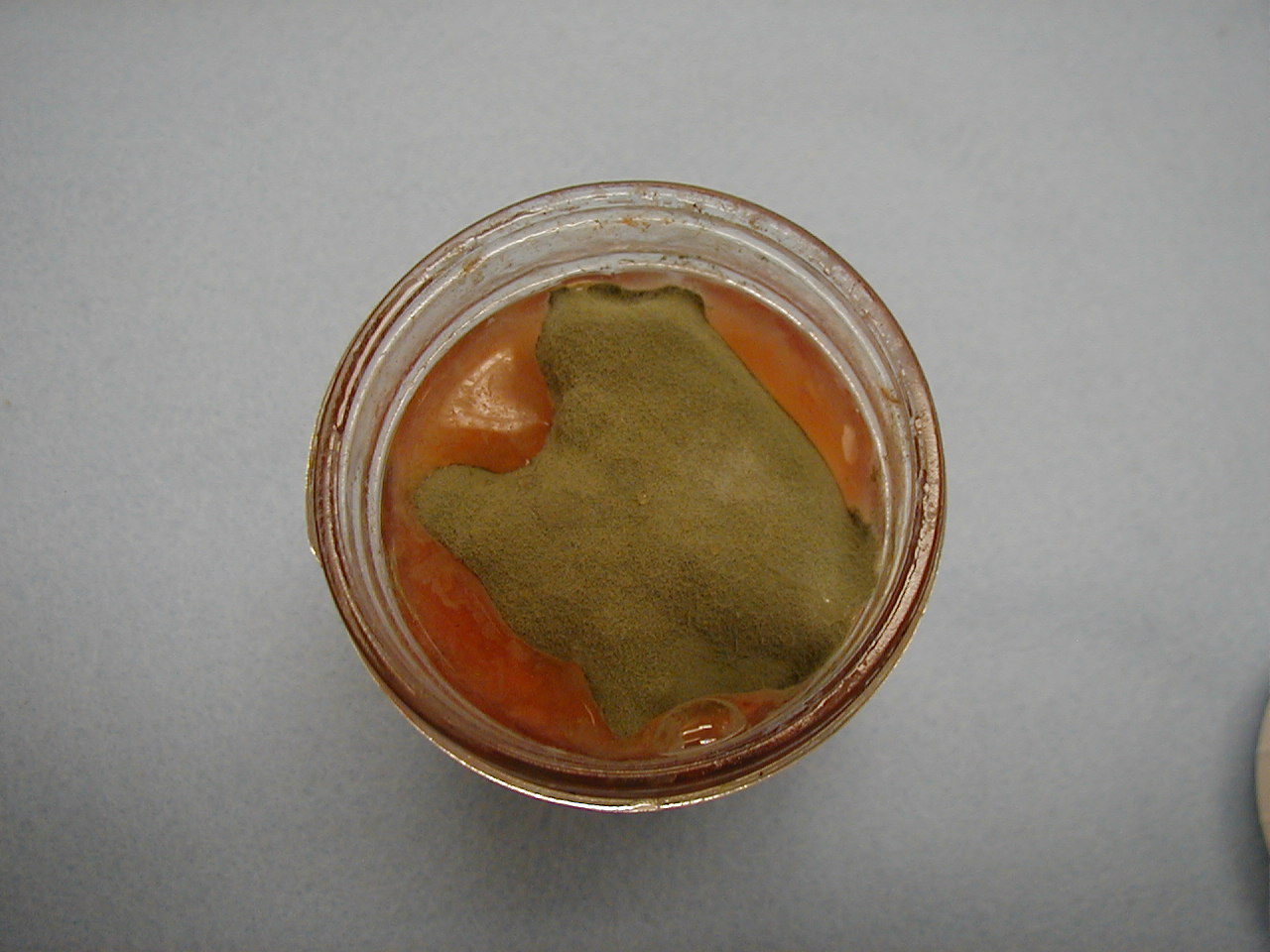
Mold on JamIf you guess at a process time for canning, you run the risk of underprocessing your food, which could lead to food poisoning and/or product loss due to spoilage.

All reliable recommendations for canning include process times that have been determined by or based on results of laboratory testing. The exact time and temperature combinations of tested canning processes are needed to assure the destruction of microorganisms that may be present in the filled jars. Sure, it’s possible that you could use unsafe canning practices for some time without causing waste or harm, but it only takes one batch of food with destructive microorganisms in it to ruin your streak of luck. And especially if you are canning low acid foods, the consequences could be severe and irreversible.

While some microorganisms are apparent just by looking (think molds growing on the surface of jelly), others remain invisible to your bare eyes (think pathogenic bacteria which cause food poisoning). Many different types of mold, yeast, and bacteria dwell on food. Given their preferred conditions of moisture, acidity, oxygen levels, and temperature they will grow, and some will even product toxin.

Fortunately, all microorganisms can be destroyed by breaking their threshold for heat. The process times provided in each of our home canning recommendations have been found to deliver enough heat to destroy microorganisms of concern in that particular food. Characteristics such as consistency, pH level (acidity), size of food pieces, presence of protective nutrients, size and shape of jars, and solid to liquid ratio all influence the ability of heat to move through and thoroughly penetrate the entire contents of a filled jar. You can trust that your home-canned foods will receive adequate heat treatment by using proper canning methods and following recommended process times.

Why does each recipe have a process time table with multiple times or amounts of pressure? (See Crushed Tomatoes for a good example.) Because atmospheric pressure decreases as altitude increases, causing water to boil at lower temperatures as altitude increases. In order to achieve the same overall heat treatment as at sea level, more time is needed in a boiling water canner at higher elevations (since the temperature of the water distributing the heat is less). Pressure canning relies on temperatures inside the canner building even higher than that of boiling. So, likewise, more pressure needs to be applied to a pressure canner at higher elevations so that the temperature inside can reach higher.

If you’d like to learn more about how process times are determined for home-canned foods, please read ‘Backgrounder: Heat Processing of Home-canned Foods’ by Elaine M. D’Sa.

Melt-in-your-Mouth Lemon Curd

lcurdbowl6

Although not meant to be a part of your everyday diet (you’ll see why when you consider the ingredients list), lemon curd sure is a special treat! A traditional English sweet spread, curds work well as a topping on cakes, cookies, and scones or as filling in pies and tarts. You could spoon it onto cream cheese for a unique dip or simply drip it over ice cream or frozen yogurt.

Making lemon curd is somewhat challenging, so if you are a novice then you might want to recruit help from a more experienced cook. And, as usual, if you are new to canning then please read step-by-step instructions on Using Boiling Water Canners and Principles of Home Canning.

frozen l curd

You can prepare this lemon curd to be consumed fresh, frozen, or canned. You could even make Lime Curd instead, substituting the lemon juice and zest for equal parts lime juice and zest. Either way, fresh curd needs to be refrigerated and eaten within 4 weeks, frozen curd will maintain best quality for up to a year, and canned curd for just 3 to 4 months.

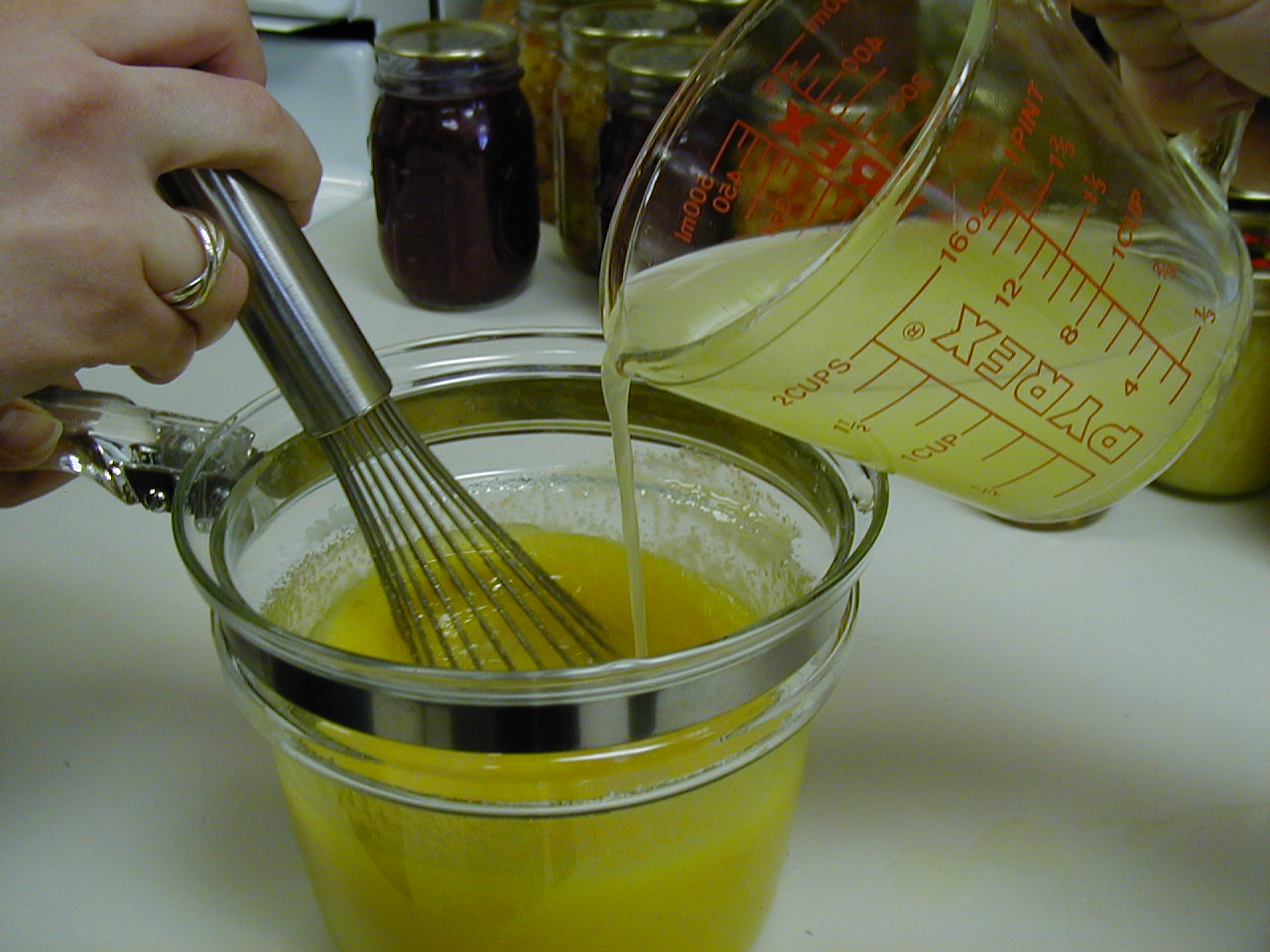
The procedure for making lemon curd is an exacting process. Low-acid foods make up a significant portion of the ingredients (butter and eggs), so it is especially important to follow a tested recipe and canning process time for safety’s sake. Instead of detailing each step of the procedure here, please review the ingredient and equipment lists below, and then use these links for complete instructions from the National Center for Home Food Preservation: Canned Lemon Curd and Preparing and Preserving Lemon Curd (frozen).

l curd ingredientsl curd whisking

Lemon Curd, canned or frozen

Ingredients:

2½ cups superfine sugar (or grind granulated sugar in a food processor for one minute)

½ cup lemon zest (optional)

1 cup commercially bottled standard lemon juice (needs to be bottled for consistent pH)

¾ cup unsalted butter, chilled and cut into approximately ¾-inch pieces

7 large egg yolks

4 large whole eggs

Equipment needed:

lemon zester

small mixing bowl

balloon whisk

1½ quart double boiler

mesh strainer

kitchen thermometer measuring at least up to 180°F

silicone spatula or cooking spoon

dish cloth or towel

medium-sized glass or stainless steel mixing bowl

1 quart-sized or 2 pint-sized freezer containers and plastic food wrap (only if freezing)

3 to 4 half-pint canning jars, lids, and ring bands and a boiling water canner (only if canning)

This entry was inspired by the season, the Valentine’s Day holiday (because lemon curd makes an impressive gift whether fresh or preserved) and by the article Preserving and Preparing Lemon Curd by Elaine M. D’Sa.

Got the Wintertime “Greens”?

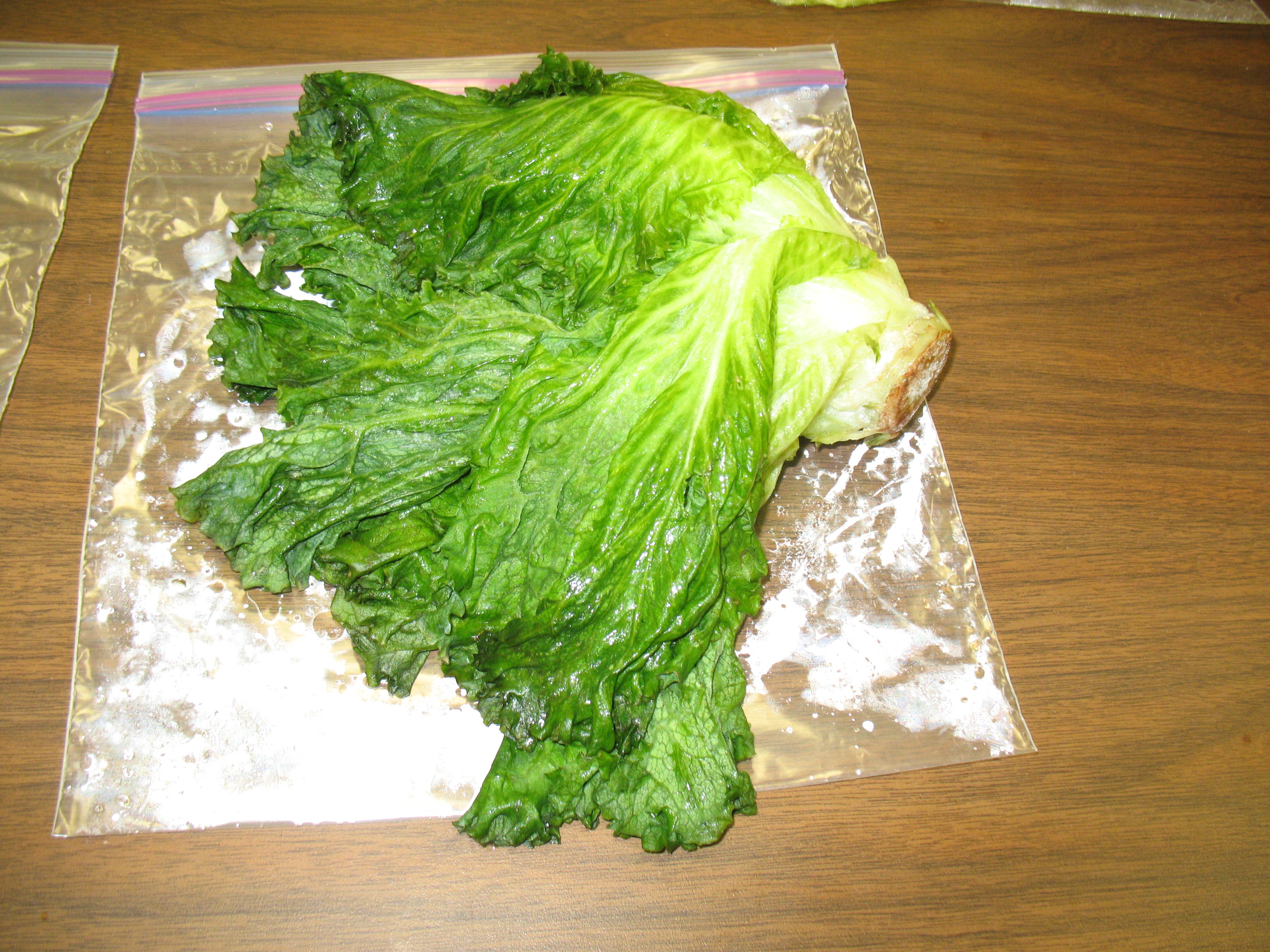
frozen lettuce

Chances are that you don’t have much to harvest from your garden these days, but if you do, then there’s a good chance it’s at least somewhat green and leafy. Lettuce, bok choy, spinach, turnip greens, collards, and swiss chard are among the hearty plants that are able to thrive in cooler temperatures. If your local temperatures have been too cold even for those crops, then head to a grocery store and keep your eyes open for special deals and seasonal sales in the produce department. Keep in mind however that lettuce has such a high water content and such thin tissue that it does not tend to preserve well using any method.

As mentioned in the recent New Year’s posting, Spinach and Other Greens can be canned, using a pressure canner. You might be amazed at the quantity you can fit in each jar once the tender leaves have wilted from being steamed – a canner load of 9 pints requires about 18 pounds of greens, and a canner load of 7 quarts holds an impressive average of 28 pounds! Note: These “other greens” should be greens with a similar texture to spinach, and not very hard, firm leaves such as cabbage.

Freezing greens is an option, but is recommended only for use as a cooked vegetable. This is for the sake of quality — their cells are full of water and those thin cell walls will burst when that water freezes and expands. So, rather than making a salad with frozen greens, try using them in casseroles, lasagna, soups, sauces and dips. Also, keep in in mind that leafy greens will heat more evenly if thawed before cooking. The water blanching time for most Greens, including Spinach, is 2 minutes, but water blanch collards for 1 additional minute (blanch time: 3 minutes) and Cabbage for 30 seconds less (blanch time: 1½ minutes). Blanching is important to slow or stop destructive enzyme action, clean surfaces, brighten color, help retain vitamins, and make the vegetables easier to pack into jars. Specific directions for water blanching are available here.

Blancher

Perhaps the least common method of preserving greens is to dry them. However, dehydrating can be a useful method for use in baked goods, soups, and casseroles. Dried greens may even be ground into flour to sneak some extra nutrients into breads, pancakes, and cookies. As with freezing, blanching is required. Cabbage can be water blanched for 1½ to 2 minutes or steam blanched for 2½ to 3 minutes or until wilted. Other greens can be water blanched for 1½ minutes or steam blanched for 2 to 2½ minutes or until wilted. Read this publication from the University of Georgia for more information about Drying Fruits and Vegetables.