Monthly Archives: September 2013

Pick a Bean, any Bean…


There are so many different types of beans (although we don’t actually have recommendations for canning jelly beans, sorry, but that would be a sticky mess). Likewise, you have many choices for canning them. If you are deciding what to do with your harvest of beans, or maybe just hankering to put some up just the way you like them, then use the links below to find tested recommendations from USDA.

As a low-acid food, beans require the use of a pressure canner for canning them. If you are new to pressure canning or could use a refresher of the basic how-to, then please read Using Pressure Canners before beginning. If this is your first time canning, then also read Principles of Home Canning.


All Varieties of Shelled, Dried Beans or Peas may be canned in water using this basic, no-frills recommendation that includes only salt as an optional addition. If you’d rather can hearty flavor into your beans, and you have a full day to boil and bake, then prepare Baked Beans, with molasses, vinegar, salt, mustard, and bacon. If you don’t have quite enough time for all that, but still want that sort of flavor, then try Beans, Dry, with Tomato or Molasses Sauce.

If your beans are of the Lima variety, then follow these directions for Fresh, Shelled, Lima Beans. Follow these similar procedures, but slightly different directions for Snap and Italian Green and Wax Beans. As you’re deciding whether to prepare a hot pack or raw pack, remember that hot packs are often considered to produce the highest quality final product, and you can often fit more beans into one jar, but raw packs do cut down on the prep time.
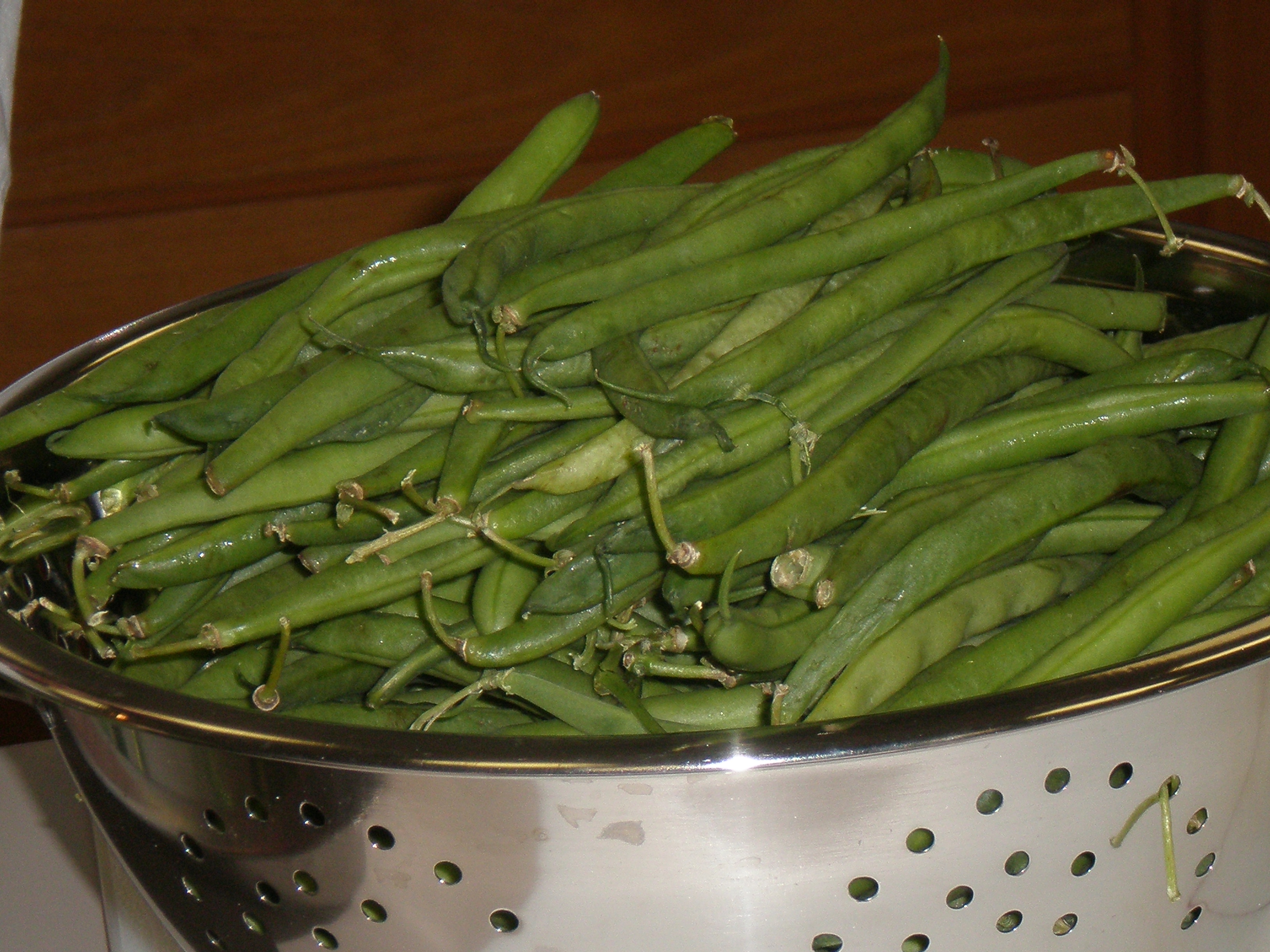
Green Beans

If canning is not your preservation method of choice, then refer to our recommendations for freezing beans – blanching times vary slightly between Green, Snap, or Wax Beans and Lima, Butter, or Pinto Beans .
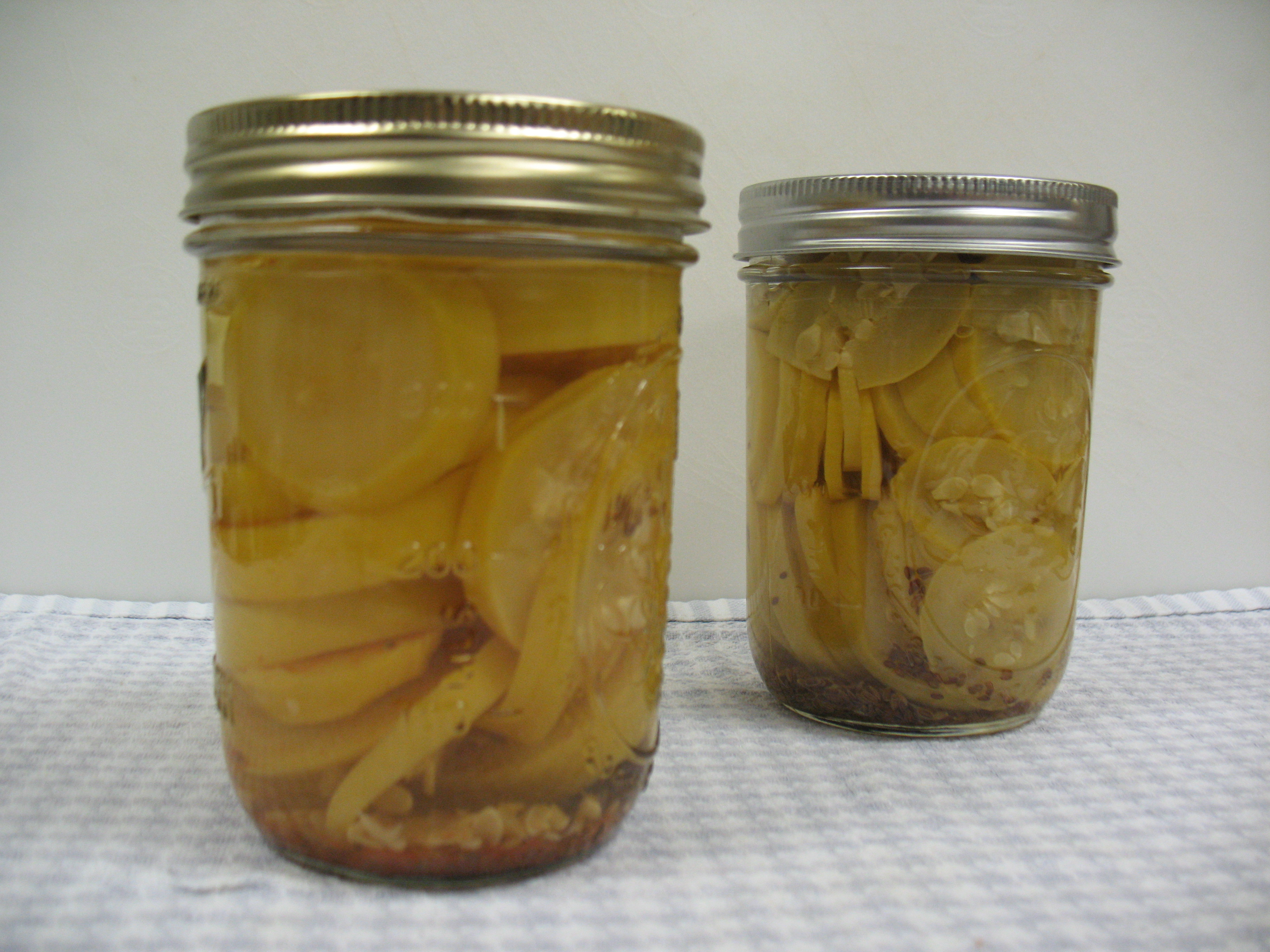
 

So long Summer Squash…see you this winter!

Squash PicklesSo, if you’ve already grilled squash outside for a cook-out, prepared stir-fry with squash, enjoyed a delicious squash casserole, and even fried squash blossoms, then you might be wondering what else you can do with the summer squash that’s still coming in. Preserve it!

One tasty option is to make Squash Pickles, following these recommendations from USDA/University of Georgia:

Recipe makes about 5 pint jars.

Ingredients:

4 pounds summer squash (or zucchini)

½ cup canning salt

1 quart vinegar (5%)

1 cup water

Dill seed (1 teaspoon per pint)

Garlic (1 clove per pint, if desired)

Procedure:

Wash squash, remove ends and slice into rounds. Pack garlic, dill seed, and squash into jars, leaving ½-inch headspace. Bring vinegar, water, and salt to a boil; simmer for 5 minutes. Fill jars to ½ inch from top of jars with the boiling hot liquid. Remove air bubbles and check that headspace is still ½-inch. Wipe jars rims and apply lids as directed by manufacturer. Process 15 minutes in a boiling water bath (remember to make altitude adjustments as needed). For a crisper product, you may want to add an agent such as crisping products containing calcium chloride.

Generally you CANNOT safely make substitutions in tested recipes, but there are a few noted exceptions.  USDA does support the substitution of summer squash for cucumbers in this recipe for Bread-and-Butter Pickles, which you might like if you prefer a sweeter flavored pickle.  If you are not a fan of pickles, then you may prefer to include summer squash as a substitute for zucchini in the recipe for canning Mixed Vegetables .

Zucchini PicklesCanning summer squash (without pickling) is not recommended, so if you prefer the flavor of plain squash, follow these directions for Freezing Summer Squash.

Recipe from So Easy To Preserve, edited by Elizabeth Andress and Judy Harrison, printed 2011.