Category Archives: Freezing

Putting A Lid On Green Beans

IMG_1110Having a green bean emergency?! So many questions came in over this summer about canning green beans that it seems time to discuss what is and is not recommended for the process. No one wants to be told that they under-processed their precious jars of homegrown green beans and need to discard them to be safe, but unfortunately we’ve had to break the news repeatedly.

Let’s first address the most common and critical safety concern with canning green beans: “I canned my green beans using a boiling water bath…is that ok?”

Oftentimes upon the advice from a grandmother or neighbor, people make an attempt to can their green beans using a boiling water canner. BOILING WATER CANNING IS NOT A SAFE OPTION FOR GREEN BEANS. While stories may be told of how they’ve done it for years and never gotten sick, the risk of botulism is ever present in canned green beans that were processed in a boiling water canner. Such beans are under-processed, not having received a heat treatment at a high enough temperature to destroy the toxin-producing spores of Clostridium botulinum. The concern is real: under-processed green beans caused two outbreaks of botulism in the United States in 2008 and 2009.

The only process we support for canning green beans is using a pressure canner. Here are our recommendations for Canning Green Beans. The process itself is simple – wash, snap, boil, fill, process – but the use of a pressure canner is absolutely critical to ensure the safety of the beans. The pH of green beans (5.7 – 6.2) is well above the cut off that can be processed in a boiling water canner (4.6 or below).

IMG_4675If you do not have a pressure canner and do not plan to get one, you do have the delicious option of canning Pickled Dilled Beans in a boiling water canner. This recipe has enough vinegar that the overall pH of the product lowers to the safe zone for boiling water canning – also called acidification, or pickling. Don’t like pickled products? Try freezing your green beans or even drying them into a snappy snack!
Green Tomatoes: Not Just for Frying


Though there’s nothing quite like freshly battered and fried green tomatoes, there are plenty of other ways to serve green tomatoes — by preserving them first!

If you are a fan of classic kosher dill cucumber pickles, then you might like Kosher Style Dill Green Tomato Pickles. These pickles call for small green tomatoes, celery, green peppers, garlic, white vinegar, pickling salt, and fresh dill, and water. Once veggies are prepped and packed in to jars, you will pour hot brine over them then process jars in a boiling water bath. See details in the link, above.

Fans of sweeter pickles might prefer this recipe for Pickled Sweet Green Tomatoes. It calls for green tomatoes, onions, pickling salt, brown sugar, vinegar, mustard seed, allspice, celery seed, and whole cloves. The procedure takes more time than the kosher dill recipe; once the tomatoes and onions are washed and sliced, they are sprinkled with salt and left to stand for 4 to 6 hours. Then they are boiled for 30 minutes with all other ingredients (the spices tied in a spice bag) before packing them into jars and covering with the hot pickling solution.

Finally, for a truly sweet and spicy pickled green tomato, try this recipe for Spiced Green Tomatoes. You will need very small green tomatoes (like fig or plum-shaped tomatoes), sugar, cider vinegar, cinnamon sticks, whole cloves, whole allspice, and whole or ground mace. This procedure calls for scalding and peeling the whole tomatoes, dropping them into syrup made of the other ingredients, then boiling until the tomatoes are clear. After straining the syrup in order to remove the whole spices, you will pack tomatoes into jars and then pour the syrup to cover tomatoes.

Green tomatoes are also an important component is several delicious relishes: Fall Garden Relish with cabbage, cauliflower, onions, peppers, salt, sugar, celery seed, mustard, and turmeric; Piccalilli with peppers, onions, cabbage, salt, pickling spice, vinegar, and brown sugar; Pickled Green Tomato Relish with peppers, onions, salt, sugar, vinegar, mustard, and cornstarch; Rummage Relish with red tomatoes, cabbage, onions, celery, peppers, salt, sugar, garlic, celery seed, cinnamon, mustard, ginger, cloves, and vinegar.

And if fried really is your favorite, but you’ve had enough for now, then here’s how to freeze green tomatoes for frying later: wash, core and slice green tomatoes to ¼-inch thick. Pack the slices into containers with freezer wrap between slices. Remember to leave ½-inch headspace between the slices and the lid, then seal container and place it in your freezer.

It’s in your garden, it’s kind of gooey, and no, it’s not a slug…

It’s Okra!

In addition to being supremely slimy (and providing high fiber from all that mucilage), did you know that okra is also in the same family as cotton, cacao, and hibiscus (Malvaceae)?

Once you’ve had enough fresh southern-style fried okra this spring, preserve those precious pods by freezing, drying, pickling, or canning them. Complete recommendations are accessible by clicking the blue links below.

Freezing Okra is simple, but the best quality frozen okra will result from smoother rather than more ridged varieties because the smooth types do not split as easily. Water blanch small pods (4 inches or less) for 3 minutes and large pods for 4 minutes. Quickly cool and drain pods, then either leave whole or slice crosswise. Pack into freezer containers leaving ½-inch headspace, seal, and freeze.

For Freezing Okra for Frying, follow instructions above but dredge with flour or meal after slicing crosswise. Spread in a single layer on shallow trays and place trays in freezer just long enough for them to firm, then package quickly leaving ½-inch headspace, seal, and freeze.

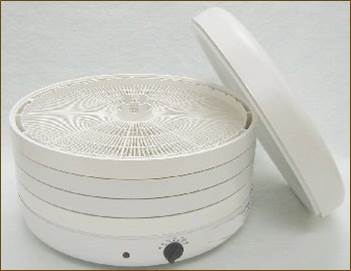
DehydratorDrying Okra is also a simple process, so long as you have a food dehydrator or an oven that registers 140°F. (And drying really reduces that gooey slime.) Wash, trim, and slice okra crosswise into 1/8- to ¼- inch disks. No blanching is required, just place in a single layer on dehydrator trays or cookie sheets and dry for 8-10 hours in a dehydrator, up to twice as long in an oven. Drying time depends on air circulation — directing a fan towards a slightly opened oven speeds up drying time.

As with pickled products in general, this recipe for Pickled Dilled Okra contains enough vinegar in proportion to solid food that the previously low acid food becomes acidified. Unlike okra by itself, which is a low acid food, acidified foods like this pickled okra can be safely processed in a boiling water canner. And, it makes a great, tangy snack!

venting - visible funnel of steamUsing a pressure canner, okra can be canned by itself or with tomatoes. Directions for Canning Okra call for tender young pods to be washed and ends trimmed, then left whole or cut into 1-inch pieces. After boiling the pods for 2-minutes, drain liquid such that you can use it to cover the pods after you pack them into jars. Leave 1-inch headspace. Add 1 teaspoon salt to each jar for flavor, if desired. Process in a pressure canner; pints for 25 minutes and quarts for 40 minutes. Use the tables in the recommendations to make appropriate altitude adjustments.

For Canning Tomatoes with Okra, okra is added to tomatoes at about a 1 to 3 ratio. Tomatoes are a borderline acid food and, as you now know, okra is a low acid food, so be sure to follow the tested directions and pressure canning process times from USDA.

Going Wild with Cherries

Raw, Washed CherriesQuick! Cherries’ peak growing season is so short, you don’t want to miss making the most of any fresh ones you can get a hold of. If you buy cherries from a typical grocery store, you are likely to find the best deals of the year during the early summer months of June and July.

cropped cherry jarsThere are so many ways to preserve cherries that instead of describing each method here, you’ll find complete recommendations on the National Center for Home Food Preservation website by clicking the blue links, below.

With about 3 pounds (2 quarts) of sour cherries, try making Cherry Jam with powdered pectin or the equally scrumptious Cherry Jam with liquid pectin.  Goes great on biscuits, thumb-print cookies, or mixed into plain yogurt.

If you have a bit more time available, then you’ll be able to prepare the juice needed for making Cherry Jelly with powdered pectin or Cherry Jelly with liquid pectin.

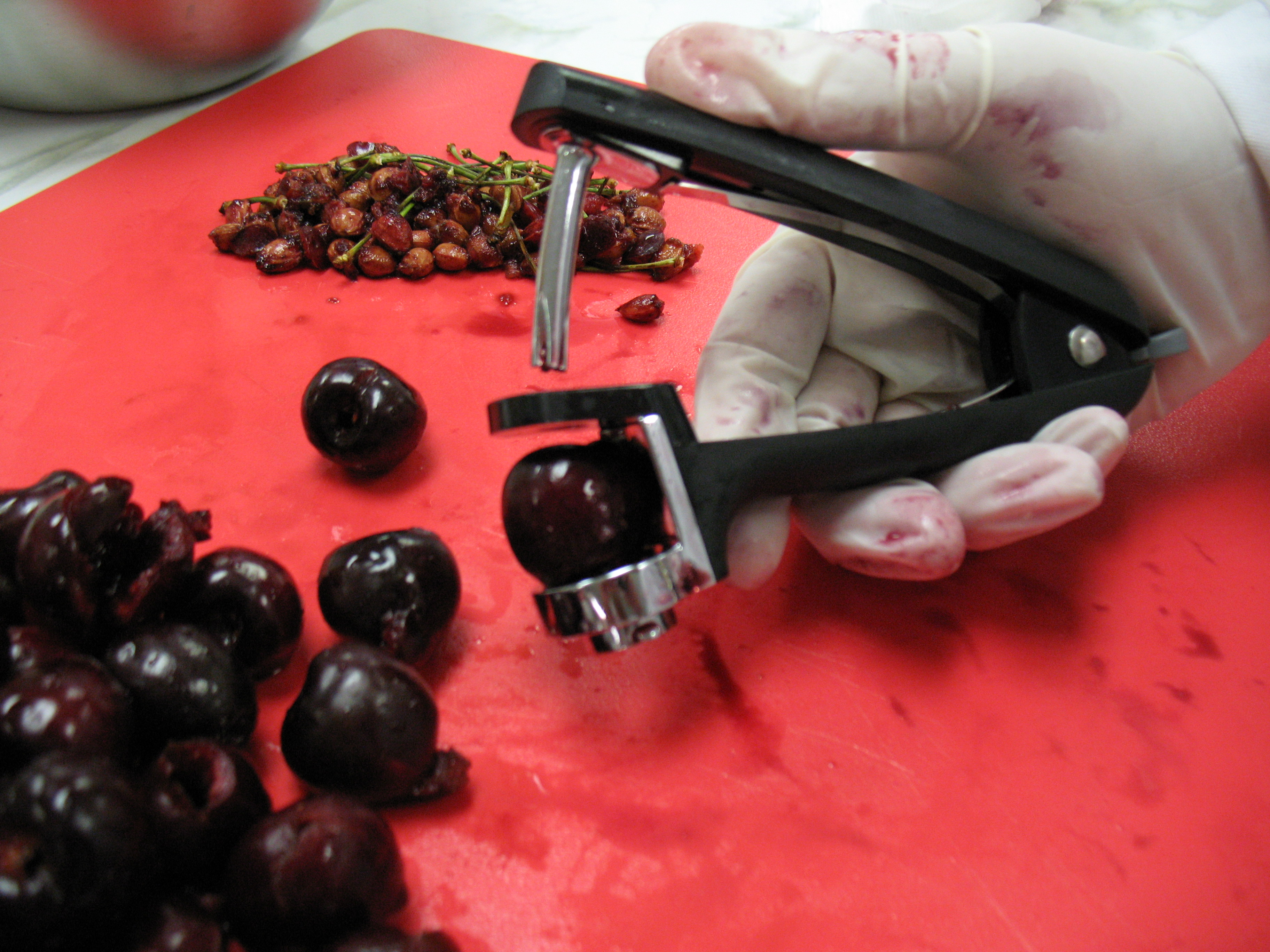
Pitting CherriesAnother option for sour cherries is to can Sour Cherries – Whole. And, the very same procedure and process times are used to can Sweet Cherries – Whole. You could even mix sweet and sour cherries!

For an extra sweet spread option, can Sweet Cherry Topping, made with Bing cherries, water, sugar, and liquid pectin.

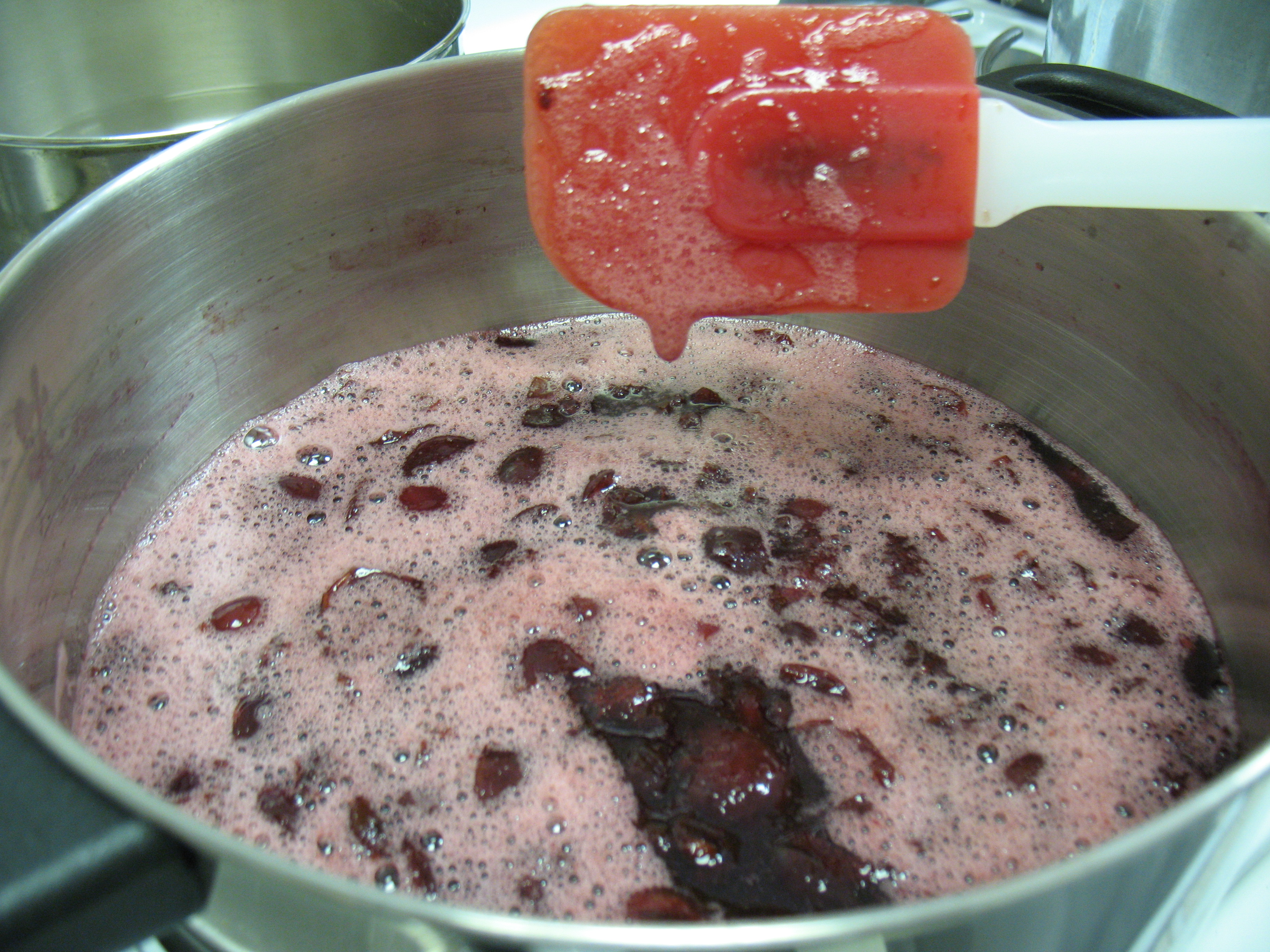
Cherry Syrup is another way to make and can a sweet topping, this one more pourable/liquid-like and less spreadable/solid-like than the Sweet Cherry Topping, above. You may use any type of cherry for the syrup.

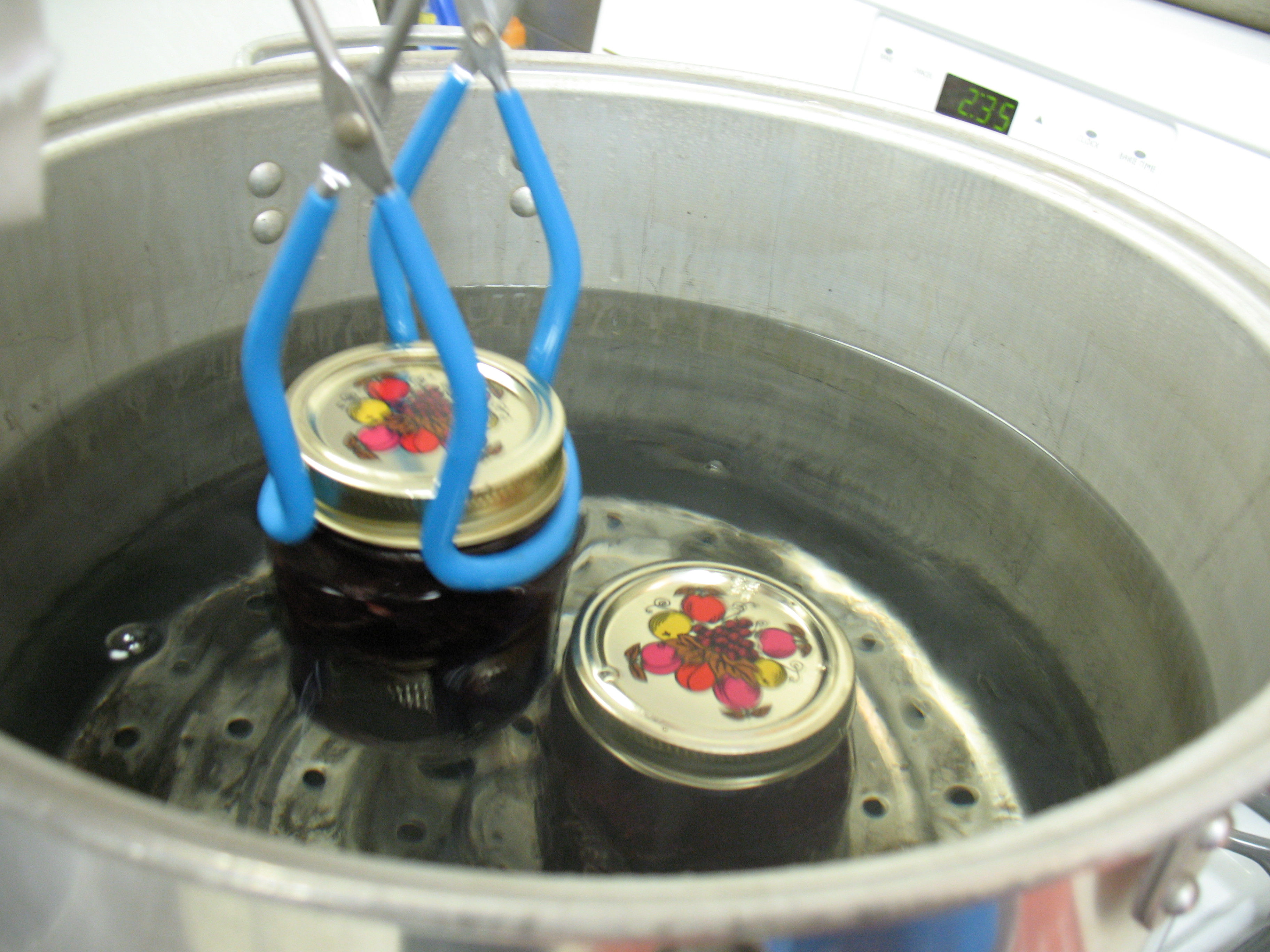
Boiling Cherries into SyrupLowering Jars into Canner

In case canning is not your preferred preservation method, you could freeze your Sour Cherries or Sweet Cherries. The difference between the two is due to balancing the flavor of sour cherries with slightly more sugar. Sour cherries can be packed in 50% sugar syrup or a sugar pack, whereas sweet cherries are packed in 40% sugar syrup or a dry pack, no sugar added.

Last but not least, Dried Cherries make a great snack, either plain or as an ingredient in fancy trail mix with nuts and chocolate pieces. Drying cherries takes just a few steps – start with ripened cherries and stem, wash, drain, and pit them, leaving whole, halving or chopping as you please. Whole cherries need to be dipped in boiling water until skins split to help moisture escape while they dry. For sour cherries, you will syrup blanch them for 10 minutes. Make sure you have 24-36 hours available to check on the cherries as the complete the drying process in a dehydrator.